
You're standing in a plant room with a couple of old extinguishers that have sat on the wall too long. The gauge on one looks questionable, the label's faded on another, and somebody has asked whether they can just go in the next skip run. That's the point where the easy answer starts causing trouble, because a fire extinguisher is a pressurised vessel first, and only becomes scrap metal after it's fully dealt with.
If you manage a site in Queensland, the right way to think about how to dispose of fire extinguisher units is simple. First, identify what's inside and whether the cylinder still holds pressure. Then decide whether it belongs in a hazardous-waste stream or a metal-recycling stream, because that pressure-state decision point is what changes the whole job.
Table of Contents
- Why Old Extinguishers Are Not Just Scrap Metal
- Common Extinguisher Types and What They Contain
- The Safe Disposal Workflow Step by Step
- Choosing Between Waste Contractor, Recycler, and Technician Collection
- How Disposal Fits Into AS 1851 and QLD Compliance
- Common Mistakes We See on Queensland Sites
- Your Disposal Checklist and When to Call a Licensed Provider
Why Old Extinguishers Are Not Just Scrap Metal
A North Brisbane facility manager once picked up a 15-year-old CO2 extinguisher and asked the same question I hear on sites all over Moreton Bay and Ipswich, “Can this just go out with the metal?” The short answer is no, not until you know whether it's still pressurised and what agent it contains. That's the whole compliance trap, because an extinguisher that looks like a bit of steel can still be a stored-energy device with residual chemical risk.
Pressure comes before metal value
That distinction isn't a theory. The regulatory summary from the Hong Kong Fire Services Department points to the Waste Disposal Ordinance (Cap. 354) and the Waste Disposal (Chemical Waste) (General) Regulation (Cap. 354C) for extinguishers that still contain chemical substance or are under stored pressure, and it directs owners to arrange collection before disposal or recycling. It also states that once the gas or extinguishing substance has been fully exhausted, the cylinder can be recycled as waste metal after discharge. Hong Kong Fire Services Department regulatory summary
That same pressure-state logic is what matters on Queensland sites. If the unit is still charged, treat it as regulated waste or a specialist handling job. If it's fully exhausted and confirmed depressurised, the steel body can move into the recycling stream.
Practical rule: if you can't prove zero pressure, you haven't reached the recycling stage yet.
A lot of businesses get caught because they see the outside of the cylinder, not the condition inside it. Corrosion at the base, a damaged head, or a missing pin are all signs that the unit needs attention before anyone starts moving it around. Skip-bin disposal looks tidy from a distance, but it bypasses the one check that keeps your team, your waste contractor, and your compliance file out of trouble.
The safest mindset is to treat every unwanted extinguisher as a question, not as rubbish. Once you know whether it's charged or fully empty, the rest of the workflow becomes much clearer.
Common Extinguisher Types and What They Contain
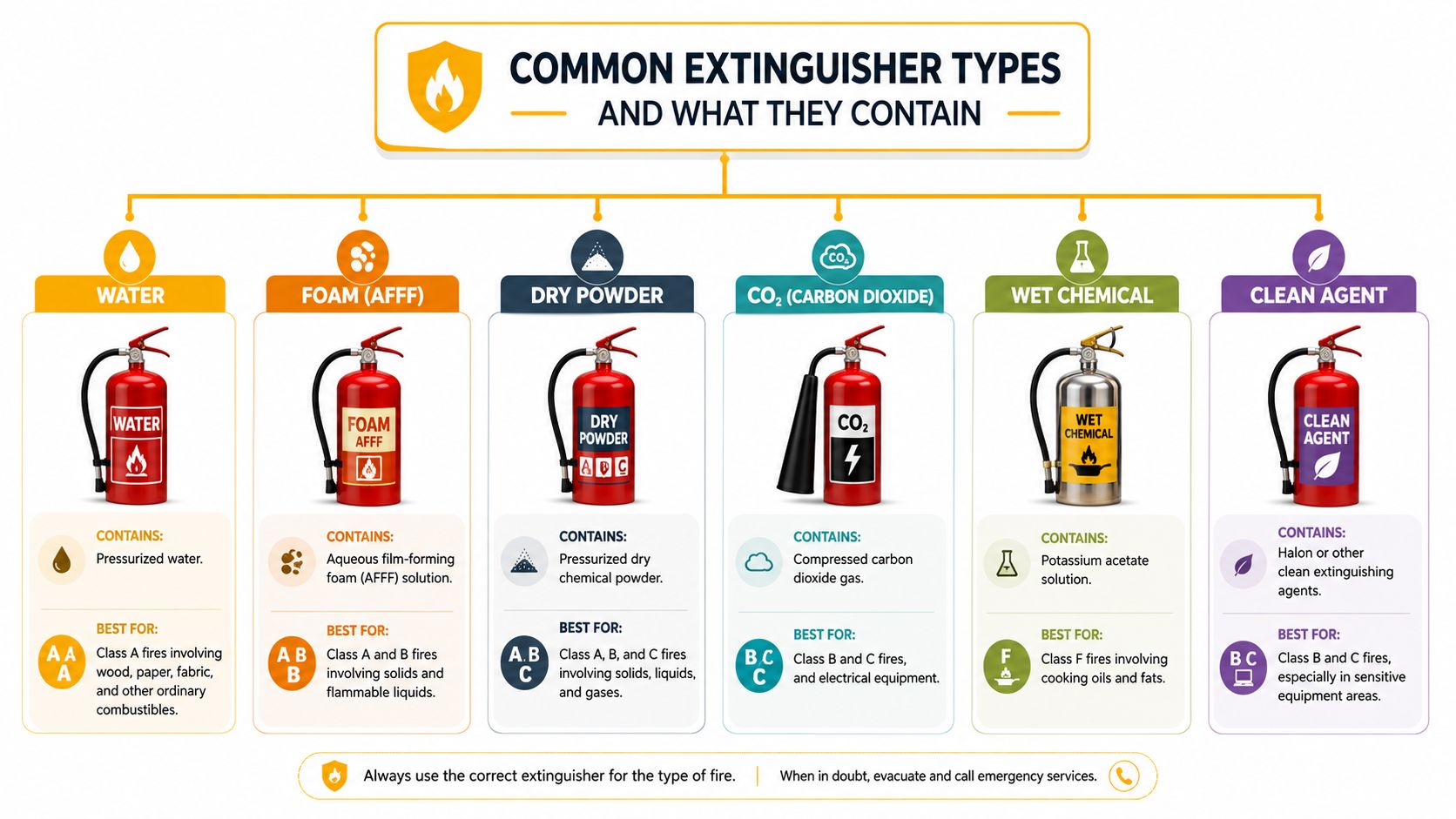
A Queensland plant room usually has a mix of extinguishers, not one neat type. The label, cylinder shape, and colour coding from the AS/NZS 1841 families tell you a lot before you touch anything, and the contents tell you how the disposal pathway changes at end of life. That's why a dry chemical unit in a workshop doesn't get the same treatment as a CO2 bottle beside a server rack.
The main units you'll see on site
Dry chemical powder extinguishers are common in workshops, loading docks, and plant areas. They contain powder and are stored under pressure, so a full or partially discharged unit still needs controlled handling before it becomes scrap.
CO2 extinguishers are the one that most often gets people into trouble. They're used around electrical switchboards and other sensitive areas, but they're also pressure vessels, so they shouldn't be treated casually or opened by someone who doesn't know the equipment. The disposal guidance you'll see in practice treats CO2, halon, and other non-water-based units as items that need hazardous-waste handling or specialist drop-off rather than ordinary household disposal.
Water and foam extinguishers are generally simpler once fully discharged, but the cylinder still needs to be confirmed empty before it can join the metal stream. If foam is involved, don't assume it's the same as water. The contents and the recovery route can be very different.
Wet chemical extinguishers are common in commercial kitchens. They're tied to kitchen fire risk, and they need a careful end-of-life call because the contents and the pressure state both matter.
The internal reference below is useful if you're checking the wall points, tags, and physical cylinder style against what's installed on your site. Portable fire extinguisher reference
A quick look at the label can stop a bad disposal decision before it starts.
What matters for disposal
The practical question is always the same, what's inside, and is it still under pressure? If the answer is uncertain, the extinguisher should be treated as a controlled item, not as loose metal. That's especially true for units with mixed or specialist contents, because the disposal route changes before the recycler ever sees them.
On a working site, that recognition step saves time later. It also stops staff from trying to dismantle the wrong cylinder, which is where most unnecessary risk starts.
The Safe Disposal Workflow Step by Step
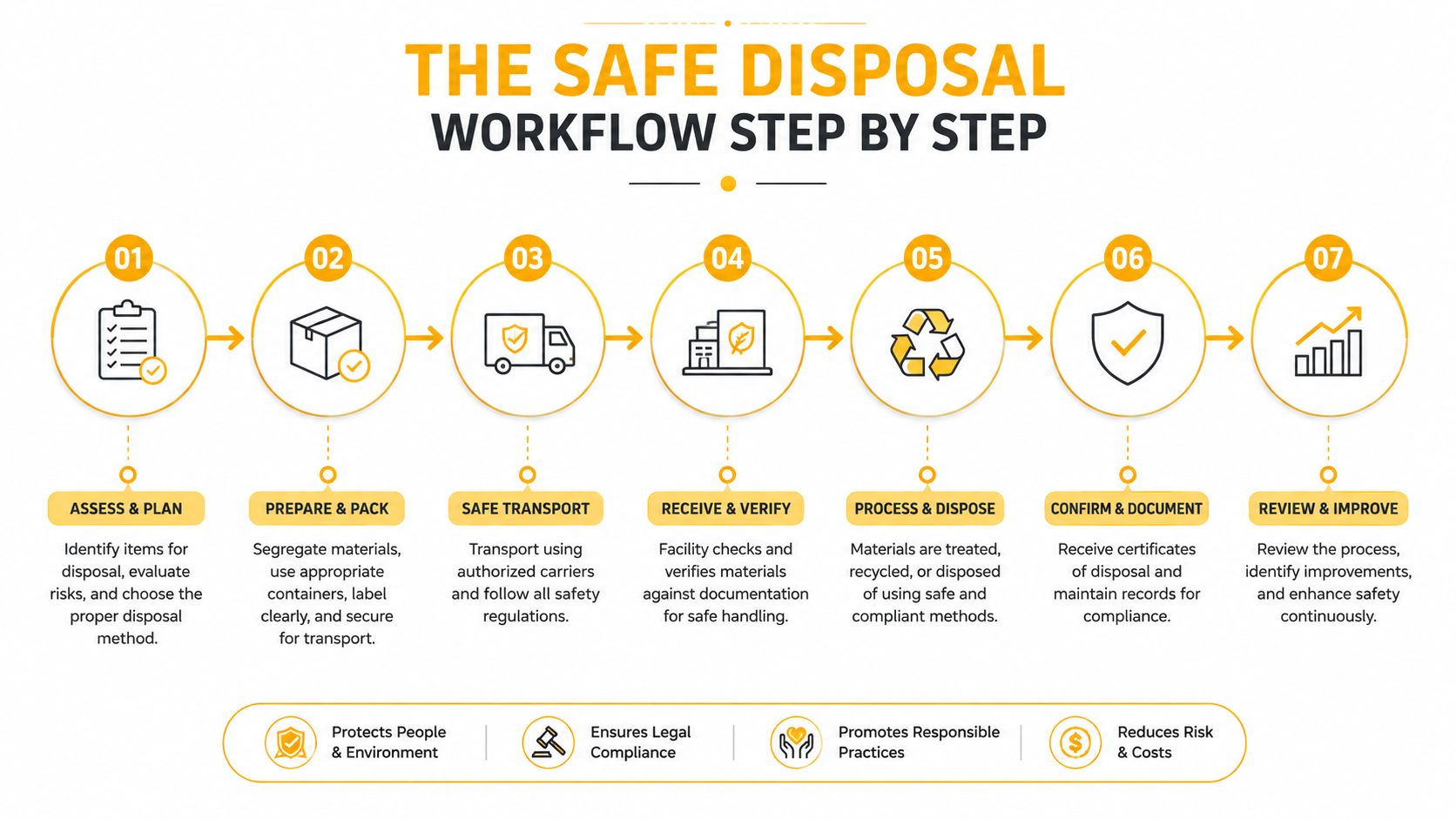
The process starts outside, not in the plant room. Move the extinguisher to a well-ventilated outdoor area away from people, vehicles, and stormwater drains, because the discharge can leave residue and a pressurised release can still create a hazard if something goes wrong. Wear basic PPE that matches the contents and condition of the unit, and keep the cylinder stable while you work.
Discharge, then wait
Once the unit is positioned safely, discharge it in a controlled way. The practical guidance used across public-sector disposal programs is consistent, discharge outdoors, wait two to three days, then check again for any remaining pressure before the head comes off and the unit moves towards final disposal or recycling. That staged approach matters because a cylinder can seem empty while still holding enough energy to vent unexpectedly.
After the waiting period, check the gauge again. Don't guess. If there's any sign of residual pressure, stop there and treat it as a still-pressurised vessel. The whole point of the wait is to make sure the cylinder has settled, not just looked empty for a moment.
Separate the parts only after zero pressure is confirmed
Once you've confirmed zero pressure, remove the head and separate the valve assembly from the cylinder body. That's the point where the steel body can be identified as recyclable metal, provided the contents have been fully exhausted and the unit is safe to handle. The same public-style guidance that supports this workflow also notes a common operational limit example, King County's hazardous-waste program accepts full or partially full extinguishers at hazardous-waste sites and limits containers to 7.5 gallons or less, with a maximum of 5 tanks per trip. Fire extinguisher disposal guidance PDF
Field note: if the head comes off before you've proved depressurisation, the job's gone backwards.
For Queensland managers, the useful takeaway is straightforward. The sequence is discharge, settle, verify, separate, document. Skip one of those and you're no longer dealing with a recycled cylinder, you're dealing with an uncontrolled pressure vessel.
Choosing Between Waste Contractor, Recycler, and Technician Collection
Once the extinguisher is safe to handle, the question becomes who should take it away. In Queensland, I usually see three workable paths, and the right one depends on the pressure state, the contents, and whether the business wants the removal folded into its maintenance visit. A small café in Moreton Bay with one discharged dry chemical unit won't need the same handling as an Ipswich manufacturing site clearing multiple CO2 cylinders.
Three routes, three different jobs
A licensed hazardous-waste contractor is the right route when the unit still holds chemical contents or isn't fully proven empty. That path suits the units you should not be treating like ordinary metal.
A scrap-metal recycler suits fully discharged steel cylinders once the head has been removed and pressure has been verified as zero. That's the pathway for the body only, not for a still-charged extinguisher.
A fire protection technician collection is the most efficient route when the extinguisher is being removed during scheduled maintenance and the business wants the disposal record tied to the service history. Celtic Fire & Security offers removal of old fire extinguishers from site when requested, including taking away extinguishers that are being replaced, and sends removed units through a specialist company for safe disposal and recycling. Celtic Fire & Security
| Disposal Route | Best For | Typical AUD Cost | Documentation Provided |
|---|---|---|---|
| Licensed hazardous-waste contractor | Full or partially full extinguishers, specialist contents, units not proven empty | Varies by job and quantity | Waste receipt or hazardous-waste paperwork |
| Scrap-metal recycler | Fully discharged steel cylinders with the head removed and no residual pressure | Often low or nil for drop-off, depending on local recycler policy | Drop-off receipt or recycling acknowledgement |
| Technician collection | Sites wanting disposal handled during scheduled service and recorded in the maintenance file | Usually bundled into service arrangements rather than handled as a separate task | Service record and disposal record for the asset file |
The right paperwork matters as much as the physical handover. A recycler receipt proves the metal left site, but a technician-issued disposal record keeps the extinguisher's life cycle aligned with the maintenance file, which is what most auditors want to see when they ask where the unit went.
If the unit is still pressurised, don't convert the question into a recycling run. Hand it to a waste professional first.
For a café, that might mean one clean handover after a maintenance visit. For a plant room full of CO2 bottles, it usually means staged collection and paperwork that matches the actual waste stream.
How Disposal Fits Into AS 1851 and QLD Compliance
Disposal isn't a side job. It closes the asset's compliance history, and if you don't record it properly, the extinguisher can keep showing up in audits long after it's gone from the wall. That's why good Queensland sites keep one asset register from installation through to decommissioning, instead of relying on memory or a pile of service dockets in the bottom drawer.
The record trail has to match the physical job
The disposal point sits at the end of the maintenance cycle governed by AS 1851. If an extinguisher has been inspected, serviced, replaced, or removed, the paper trail needs to match the actual location and condition of the unit. The internal AS 1851 archive here is worth keeping in your compliance folder if you manage multiple buildings or tenancies. AS 1851 maintenance reference
A missing disposal record can create noise later, especially when an insurer, a council inspector, or a building auditor asks for evidence that the unit was handled properly. The extinguisher might be long gone, but the compliance question doesn't disappear with it.
Why the end-of-life note matters
The point of disposal records is simple, they prove the unit was removed, handled, and closed out in a way that fits the site's fire safety obligations. That matters for Queensland building fire safety records, because an asset that isn't tracked from install to decommission can make an otherwise tidy file look incomplete.
Keep the register current and the work gets easier. The service team can see what was removed, what was replaced, and what disposal path was used. That reduces guesswork during the next visit, which is exactly what you want when the building is busy and multiple trades are on site.
A clean disposal record also helps if the extinguisher becomes part of an incident review. The question then isn't just whether the unit existed, it's whether it was still serviceable, how it was removed, and whether the site followed the right process at the end.
Common Mistakes We See on Queensland Sites
A warehouse manager in the Sunshine Coast region once had a row of discharged CO2 cylinders stacked by a roller door, waiting for “the recycler to grab them.” That's a classic example of a site treating the extinguisher as dead metal before anyone had proved it was safe to store that way. The cylinders weren't doing any good sitting there, and the site had created a handling risk that didn't need to exist.
The mistakes that keep showing up
Leaving partially discharged units on the floor. That usually happens when staff think “mostly empty” is good enough. It isn't, because residual pressure can still vent unexpectedly during handling.
Tossing a discharged powder unit into general waste. A café owner in Moreton Bay did that after a kitchen incident, then discovered the mess and the compliance headache that came with it. The right move would've been a proper discharge check and a recycling or waste route matched to the unit's actual condition.
Removing heads themselves to save on service fees. A body corporate tried that on a cabinet-mounted extinguisher job, then found they'd jumped ahead of the verification step. The issue wasn't just workmanship, it was the risk of opening a cylinder before the pressure state had been properly confirmed. Cabinet fire extinguisher reference
Those mistakes all come back to the same failure point, someone decided the job was finished before the cylinder had been proven empty. That's where the risk lives.
The cleanest disposal jobs are the ones that slow down at the pressure check.
The simple fixes
Use a designated outdoor discharge spot. Keep the cylinder out of general waste until the pressure has been verified. Keep the service paperwork with the asset register so the next person doesn't have to guess what happened to the unit.
The good news is that these problems are easy to prevent once the team knows what to look for. A short check at the start saves a lot of noise later, especially on sites with multiple tenants, contractors, or rotating maintenance staff.
Your Disposal Checklist and When to Call a Licensed Provider
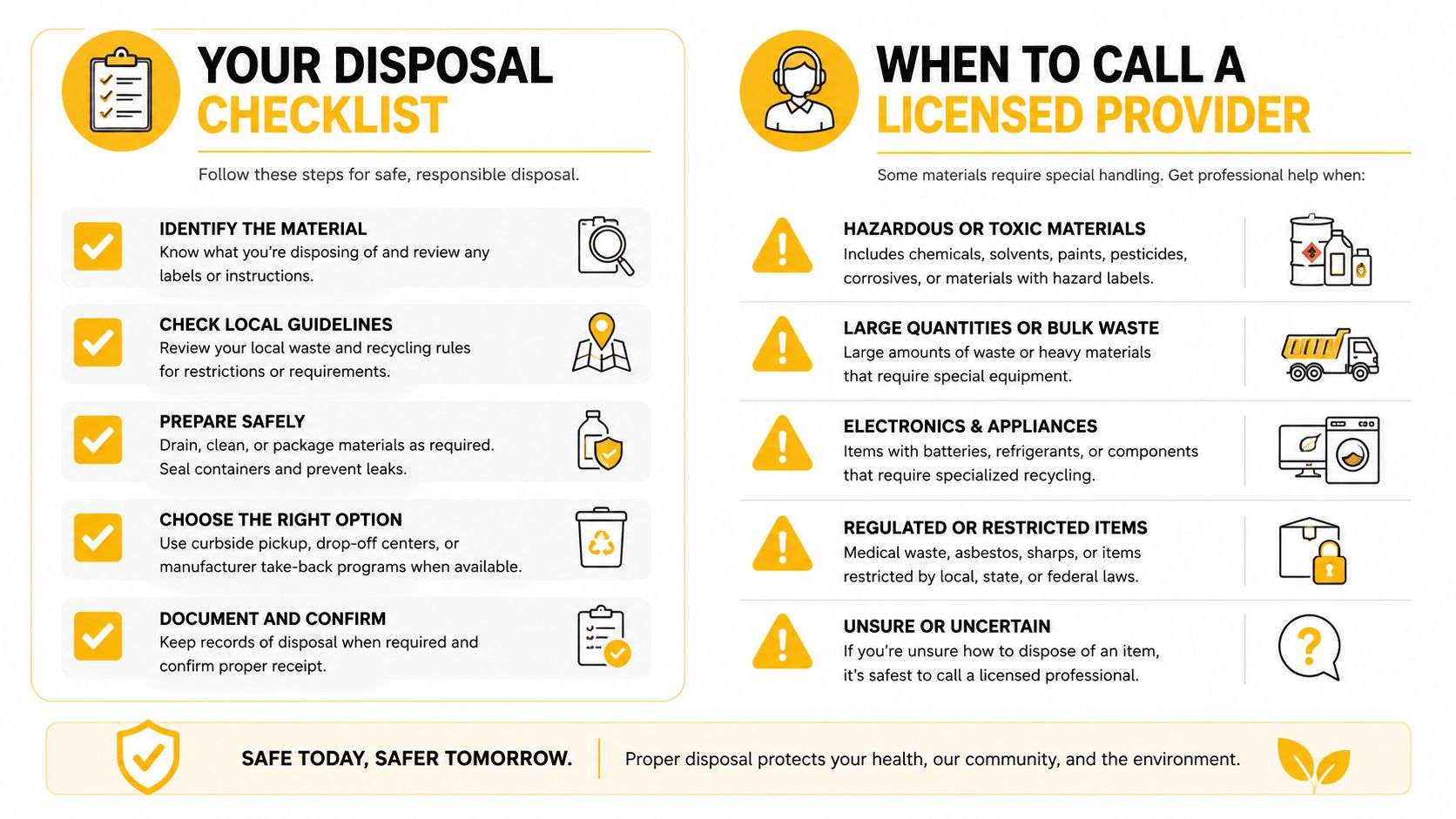
The practical checklist is short. Confirm the extinguisher type, discharge it outdoors, wait for the cylinder to settle, verify zero pressure, separate the head only when it's safe, and file the disposal record with the asset history. That's the version you can pin in a plant room or add to a maintenance register without turning it into a training manual.
Hand it off when the risk goes up
Call a licensed Queensland fire protection provider when the extinguisher is stored-pressure chemical, CO2, halon, visibly damaged, corroded, or part of a quantity that's too awkward for one person to manage safely. Those are the jobs where the pressure-state decision point and the disposal record matter most.
If the site already runs a maintenance contract, disposal can sit inside the scheduled visit instead of becoming a separate task on your to-do list. That keeps the paperwork consistent and avoids the common problem of having the extinguisher removed by one person and the record filed somewhere else later.
For managers in North Brisbane, Moreton Bay, the Sunshine Coast, Somerset, and Ipswich, the cleanest next step is to decide whether the extinguisher is a simple empty cylinder or a unit that needs licensed handling. Once that's clear, the rest of the workflow becomes straightforward.
If you'd rather have the removal, recycling handover, and records handled in one visit, Celtic Fire & Security can take unwanted extinguishers off site during scheduled fire protection work and keep the disposal tied to your maintenance file. Book a service call with the team if you want the job documented properly and managed by a local Queensland provider across North Brisbane, Moreton Bay, the Sunshine Coast, Somerset, and Ipswich.
No responses yet