
When protecting a commercial facility, installing reliable fire detection hardware is only the first part of the equation. Property managers, business owners, and body corporates must also decide what happens the moment a detector is triggered: does the system alert only the occupants on-site, or does it automatically notify emergency response services?
Understanding the operational, legal, and financial differences between monitored vs unmonitored fire alarm systems is vital for ensuring building safety, maintaining compliance with Australian Standards, and securing insurance coverage.
How Unmonitored Fire Alarm Systems Work
An unmonitored fire alarm system—often referred to as a local alarm—relies entirely on on-site detection and audible/visual notification. When smoke, thermal, or manual call points detect a hazard, the control panel triggers sirens, strobes, and building evacuation tones.
Key Characteristics of Local Fire Alarms
- On-site notification only: The alarm sounds within the building to prompt immediate evacuation.
- Manual intervention required: An occupant or passer-by must dial 000 to notify Queensland Fire and Department (QFD) or local emergency services.
- Vulnerability during unoccupied hours: If a fire starts overnight, on weekends, or during holiday shutdowns, the alarm can ring indefinitely without alerting emergency services until smoke or flames become visible from the street.
While unmonitored systems meet baseline requirements for certain low-risk or small-scale premises, their reliance on human presence represents a notable operational limitation.
How Monitored Fire Alarm Systems Work
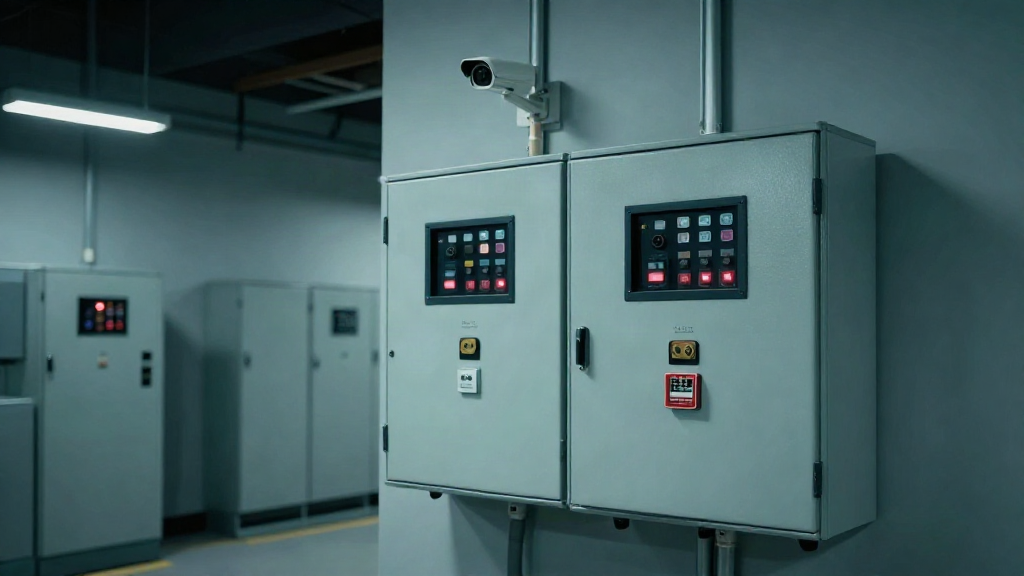
A monitored fire alarm system connects the on-site Fire Indicator Panel (FIP) directly to an accredited, 24/7 Alarm Signalling Equipment (ASE) network and a central monitoring centre or fire dispatch service.
Key Characteristics of Monitored Fire Alarms
- Automated emergency dispatch: The moment a sensor registers a confirmed fire event, data transmits immediately to the monitoring centre, which dispatches emergency responders without delay.
- Round-the-clock protection: Premises remain fully guarded 24 hours a day, 365 days a year, whether fully staffed or completely empty.
- Fault and tamper detection: Monitored connections track power failures, line cuts, system faults, and maintenance alerts in real time, ensuring issues are resolved before an emergency occurs.
Direct Comparison: Monitored vs Unmonitored Fire Alarms
| Feature | Unmonitored (Local) Alarms | Monitored Fire Alarm Systems |
|---|---|---|
| Response Time | Dependent on human detection and 000 call | Instantaneous automated transmission |
| After-Hours Coverage | None (relies on neighbours/passers-by) | Complete 24/7 continuous oversight |
| Compliance Mandates | Permissible only in specific low-occupancy classifications | Mandatory for specified BCA/NCC building classes |
| Insurance Impact | Standard premiums; potential claim scrutiny if unattended | Frequently eligible for premium discounts; lower loss exposure |
| Ongoing Costs | Routine testing and maintenance | Ongoing monitoring subscription plus routine maintenance |
Compliance and Australian Standards
In Australia, commercial building safety is governed by the National Construction Code (NCC), Building Code of Australia (BCA), and strict Australian Standards, notably:
- AS 1670: Design, installation, and commissioning of fire detection, warning, and intercom systems.
- AS 1851: Routine service, testing, and maintenance of fire protection systems and equipment.
Depending on your building’s classification, size, occupant density, and specific fire safety engineering report, direct brigade monitoring or accredited 24/7 monitoring may be legally mandated. Multi-storey residential complexes, healthcare facilities, shopping centres, industrial warehouses storing hazardous materials, and large commercial offices typically require certified monitoring connections.
Evaluating Your Risk Profile: Which Setup Suits Your Premises?
Selecting the right configuration involves balancing building risk, operational hours, and regulatory requirements.
When an Unmonitored System May Suffice
- Small, single-tenancy commercial suites with low fire hazard loads.
- Premises occupied continuously during operational hours with no high-value inventory or critical infrastructure.
- Facilities where local council approvals and BCA classifications do not stipulate mandatory ASE connection.
When a Monitored System Is Essential
- Unattended or Warehousing Facilities: Buildings housing substantial stock, plant equipment, or sensitive data that remain empty overnight.
- High-Occupancy or Multi-Tenancy Sites: Commercial towers, retail precincts, and residential body corporates where swift, coordinated emergency response saves lives.
- High-Risk Operations: Manufacturing plants, commercial kitchens, and workshops working with flammable substances.
- Insurance-Sensitive Assets: Facilities where policy underwriters mandate continuous fire signal monitoring as a condition of property coverage.
Ensure Compliance with Expert Fire Protection Services
Whether your facility requires a new system design, an upgrade to direct monitoring, or routine testing under AS 1851, working with accredited professionals ensures your property remains protected and compliant.
Celtic Fire & Security specialises in comprehensive fire protection and security installations across Brisbane, the Sunshine Coast, and surrounding regions. Our certified technicians handle end-to-end supply, installation, testing, and maintenance to strict Australian Standards—giving commercial property owners and facility managers complete peace of mind. Contact our team today to evaluate your premises and implement the ideal fire alarm solution.
No responses yet