
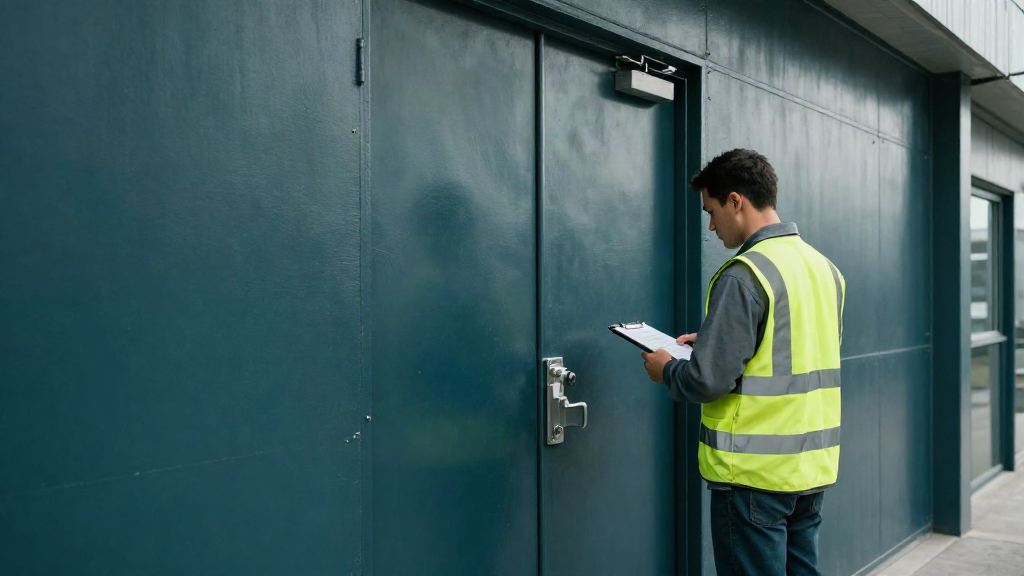
Fire doors are one of the most quietly important safety features in any commercial building. A correctly operating fire door holds back fire, heat and smoke long enough for occupants to evacuate safely and for emergency services to respond – yet it only performs as designed when it is properly installed, undamaged and routinely inspected.
For commercial property owners, facility managers and body corporates, understanding fire door inspection requirements is not optional housekeeping. It is part of meeting Australian Standards and the National Construction Code, and of protecting the people who use the building every day. This guide explains why fire doors matter, how often they must be inspected, what a compliant check covers, and how Celtic Fire & Security keeps commercial fire doors compliant.
Why fire doors are critical to passive fire protection
Fire doors form part of a building’s passive fire protection system. Working together with fire-rated walls, floors and ceilings, they divide a building into compartments that limit how far fire and smoke can spread. This process, known as compartmentation, buys time: time for people to reach a safe exit, time for a fire to be contained, and time for firefighting crews to work effectively.
Because escape routes and stairwells run through fire doors, a single defective door can undermine an otherwise sound passive fire system. A door that is propped open, has a failed self-closer or has lost its smoke seals no longer provides the protection it was designed to deliver. That is why regular, documented inspection is central to ongoing compliance.
How often must fire doors be inspected?
Fire doors sit within the routine servicing regime set out in AS 1851, the Australian Standard for the maintenance of fire protection systems and equipment. In practice, a compliance program combines three levels of attention:
- Routine checks by building occupants or site staff, typically monthly, to confirm doors are not obstructed, wedged open or visibly damaged.
- Regular inspections by a competent person, commonly at six-monthly intervals, covering the door assembly, hardware and closing action.
- A more detailed annual inspection that records the condition of each door and identifies defects needing rectification.
Frequency should also respond to events rather than the calendar alone. Fire doors should be re-inspected after any building works, after a fire or water damage, and whenever the occupancy, layout or use of a building changes. The busier and more heavily trafficked the building, the more often a proactive check pays for itself.
What a compliant fire door inspection covers
A thorough inspection looks at the door as a complete assembly rather than a single item. A compliant check will typically assess:
The door leaf and frame
Inspectors confirm the leaf and frame are undamaged, correctly aligned and free of unauthorised modifications. Warping, cracking, delamination and holes cut for new fittings all compromise a door’s fire rating.
Hardware and self-closing devices
Every moving part is tested: hinges, latches, handles, exit devices and the self-closing mechanism. Doors must close fully and latch on their own from any open position, and hold-open devices, where fitted, must release reliably on alarm.
Gaps, intumescent seals and signage
Gaps between the leaf and frame are checked against tolerance. Intumescent and smoke seals must be present, intact and not painted over, since these expand under heat to seal the opening. Clear, correctly positioned signage keeps doors usable and unblocked.
Common defects inspectors find
Across commercial buildings, the same faults recur – and each one weakens compartmentation:
- Fire doors wedged or propped open for convenience, often for airflow or ease of movement.
- Failed or disconnected self-closing devices that leave a door standing open.
- Missing, painted-over or compressed intumescent and smoke seals.
- Excessive gaps between the leaf and frame, allowing smoke to pass.
- Damaged leaves, frames or hinges from trolleys, deliveries and general wear.
- Unauthorised alterations such as extra locks, viewers or kick plates that are not part of the tested assembly.
- Missing or obscured fire door signage.
How Celtic Fire & Security rectifies fire door defects
Identifying a defect is only half the job; fixing it to Standard is what restores protection. Celtic Fire & Security supplies, installs, tests and maintains fire and smoke doors to Australian Standards, so defects are corrected by an accredited, experienced team rather than left on a report.
Rectification can range from replacing seals, hinges and self-closing devices through to repairing or replacing fire door leaves and frames, and reinstating correct signage. Because the team handles supply, installation and maintenance under one roof, the work is completed once and done right, with records kept so the building’s compliance evidence stays current.
Keeping fire doors compliant between inspections
Inspection days are only part of the story. Day-to-day habits keep a fire door system effective:
- Never prop or wedge a fire door open; if airflow is a problem, investigate a compliant solution.
- Report damage, faults or obstructions as soon as they are noticed.
- Keep the area around each door clear and signage visible.
- Maintain a documented maintenance schedule and service records for the whole building.
Talk to an accredited fire door specialist
Fire doors protect lives only when they are inspected, maintained and repaired to Standard. If you are unsure whether your commercial building meets its fire door inspection requirements, a professional assessment removes the guesswork. Celtic Fire & Security keeps commercial premises compliant across Brisbane, the Sunshine Coast and surrounding regions – contact the team to arrange a fire door inspection and a clear, prioritised rectification plan.
No responses yet