
Most advice on fire extinguisher sales starts with the wrong question. It asks which cylinder is cheapest, or which size looks right on the wall, then treats the rest as a formality. In Queensland commercial work, that mindset creates problems, because the purchase is tied to hazard matching, scheduled servicing, and audit-ready documentation, not just the hardware on day one.
For commercial sites, extinguishers sit inside a compliance system. They're part of the broader fire-suppression market where extinguishers were the largest product segment in 2023, holding 35.5% of global share, and the market was projected at US$4 billion in 2023 rising to US$7 billion by 2033 at 5.7% CAGR in the cited research Market Data Forecast. That recurring demand makes sense on the ground, because offices, retail, hospitality, industrial, and strata properties don't buy extinguishers once and forget them. They buy into a service cycle.
Table of Contents
- Why Fire Extinguisher Sales Are Not a Simple Purchase
- Understanding Australian Standards That Shape Extinguisher Selection
- The Commercial Buying Process From Hazard Assessment to Procurement
- Compliance Documentation and Audit Readiness for QLD Businesses
- How to Choose a Reliable Fire Extinguisher Supplier in Queensland
- Warranty Options and Ongoing Service Plans for Commercial Extinguishers
- Making the Right Fire Extinguisher Purchase Decision
Why Fire Extinguisher Sales Are Not a Simple Purchase
A commercial extinguisher is not a casual buy. If the wrong unit goes on the wall, or the supplier cannot support the inspection trail, the purchase turns into a liability instead of a control measure. That is why fire extinguisher sales in Queensland need to be handled as a compliance decision first and a product decision second.
The buying trigger is usually risk, not retail browsing
Portable extinguishers sit at the centre of commercial fire protection, and market analysts at Grand View Research estimated the portable fire extinguisher market at US$11.57 billion in 2024, with projected growth to US$20.00 billion by 2030 at 10% CAGR. In other market reporting, the commercial sector accounted for 55% of extinguisher sales globally in 2023. That is no surprise to anyone who has had to keep a site audit-ready.
Practical rule: if the discussion starts with price before hazard class, the site has not had a proper fire-risk conversation yet.
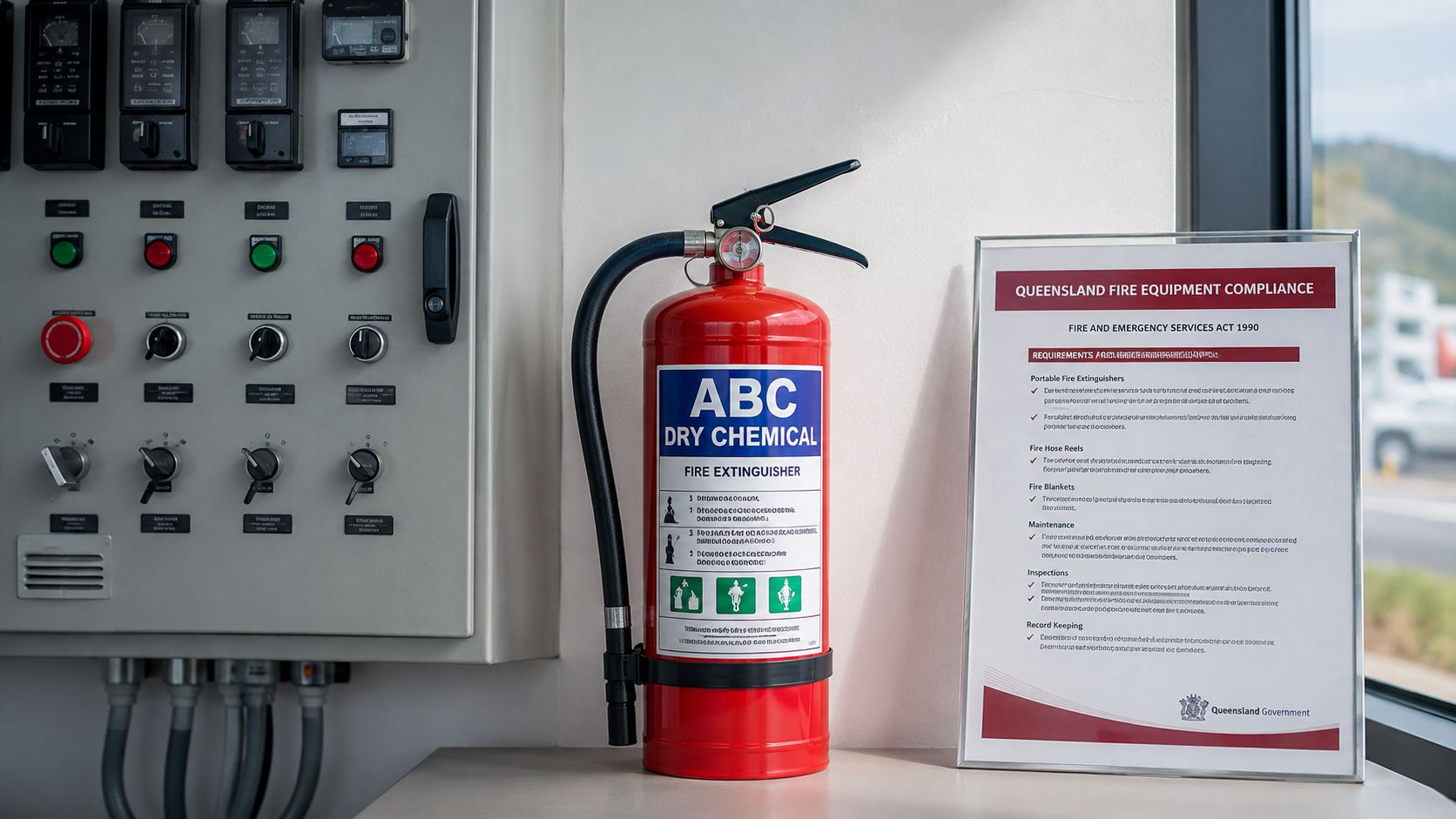
In Queensland, the buying trigger is often an inspection issue. I have seen sites in Brisbane and the Gold Coast lose time over simple misses, a powder unit mounted where a CO2 extinguisher was needed near switchboards, or an extinguisher left on site with no clear service tag history for the auditor to follow. That is the sort of finding that turns a quick compliance check into a follow-up visit and a lot of unnecessary paperwork.
That matters because most buyers are not building a collection of extinguishers, they are trying to satisfy a duty. Property managers, landlords, and business operators need a setup that stands up during inspections, supports records, and fits the actual layout of the premises. Retail centres, food premises, workshops, and strata common areas all drive different buying choices, and cabinet storage can also matter where the extinguisher needs protection from damage or theft, as shown in this guide to cabinet fire extinguisher installation.
The hidden cost sits after the sale
The unit cost is only one line in the budget. The larger cost shows up in servicing, re-tagging, replacements, and the time spent chasing records when an auditor asks for proof. That is where supplier accountability matters more than a one-off sale.
In practice, the better question is not “Which extinguisher is cheapest?” It is “Which supplier can keep this site compliant from handover to the next inspection cycle?” For Queensland commercial buyers, that question usually saves more pain than shopping for the lowest sticker price.
Understanding Australian Standards That Shape Extinguisher Selection
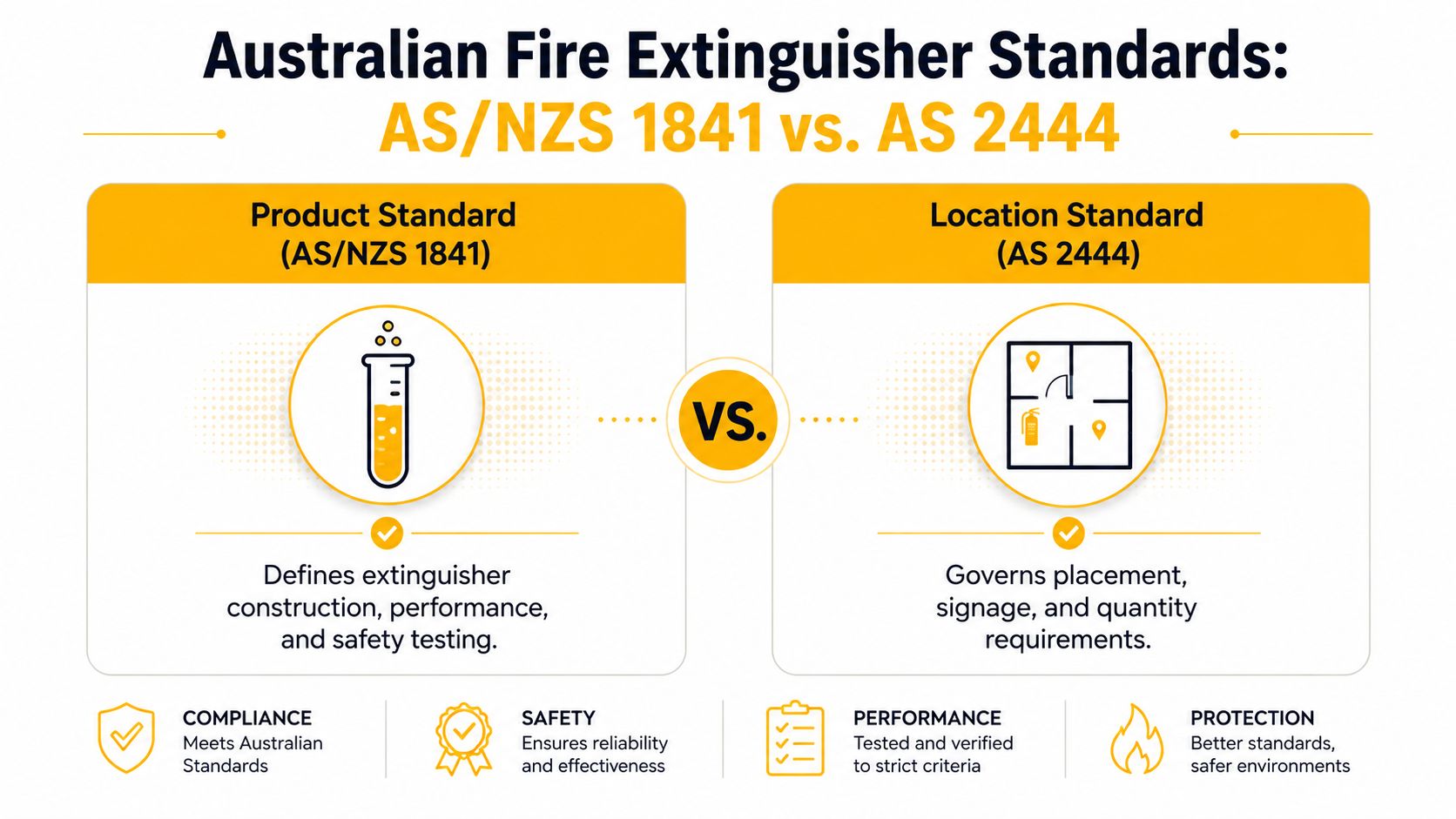
Commercial extinguisher sales in Australia are technical by design. Portable fire extinguishers sold for commercial premises are usually specified against AS/NZS 1841 and AS/NZS 1850, so the unit has to suit the hazard class on site, not just the cylinder size. Agent type, pressure system, discharge time, and rating all matter, and a purchase that ignores those details often creates compliance trouble later.
Read the rating before you read the label
A 5.0 kg CO2 extinguisher listed for Australian use is rated 10B:E, operates at 58 bar, and discharges in about 15 seconds Firesys technical data. That short discharge window is why CO2 suits electrical and switchboard risk, where clean suppression matters and you do not want residue spreading into equipment. An ABC powder unit is a different tool for a different job, and the wrong one can give a false sense of coverage.
The same principle applies to common commercial powder units. A 6 kg ABC powder extinguisher in the cited catalogue is rated 43A 183B, operates at 14 bar, and has an approximate 20-second discharge time, while the 9 kg ABC powder unit listed beside it is rated 27A 144B, uses a stored-pressure nitrogen system at 12 bar, and also has an approximate 20-second discharge time. The weight alone does not tell you which unit gives better protection for the site, because the rating, agent, and discharge behaviour all shape how it performs in use Genesis Fireline catalogue.
A bigger cylinder is not automatically the right answer. The rating and the hazard mix show whether the unit actually helps before evacuation or brigade arrival.
Placement is part of the standard too
Selection is not complete until you know where the extinguisher sits and what it covers. Product quality and location requirements work together, so a compliant sale still has to land in the right place with the right signage and access. Many DIY purchases fail here, because the buyer has a product but not a compliant installation.
For a deeper look at cabinets and housing options, the practical details in this guide to cabinet fire extinguisher setups are worth comparing against your site layout.
The Commercial Buying Process From Hazard Assessment to Procurement
A proper purchase starts with the building, not the catalogue. The first job is to assess what can burn, how the site is used, and how far a person would realistically need to travel to reach equipment. That assessment shapes the specification far more than brand preference ever will.
Size the extinguisher to the risk profile
A 6 kg ABC powder extinguisher rated 43A 183B gives materially different coverage from a 9 kg ABC unit rated 27A 144B in the cited catalogue Genesis Fireline catalogue. Both are practical commercial units, but the rating tells you more than the weight alone. A site with mixed fuel loads, open floor areas, or longer travel paths needs a different conversation than a small office with a simpler layout.
For Queensland buyers in North Brisbane, Moreton Bay, the Sunshine Coast, and Ipswich, that usually means a site survey first, then a purchasing list built around use zones. A warehouse bay, kitchen area, tenancy corridor, and switch room don't all need the same type of extinguisher. One-size-fits-all thinking is where overspending and under-protection often happen together.
Match the buying process to the building, not the invoice
The practical order is simple.
- Identify the hazard: electrical, general combustibles, mixed-fuel areas, or process-specific risks.
- Check access and travel paths: make sure the unit can be reached when a fire starts.
- Confirm the rating: don't buy by weight alone, buy by extinguishing performance.
- Align with the maintenance plan: the site has to keep that choice defensible over time.
That approach works for commercial landlords and facility managers because it ties procurement to real site conditions. It also reduces the chance of a purchase that looks fine on paper but becomes awkward at inspection time.
Compliance Documentation and Audit Readiness for QLD Businesses
A failed audit usually starts with a missing file, not a missing extinguisher. In Queensland, the sale is only part of the job. If the records are incomplete, the site struggles to show that the equipment was selected, installed, inspected, and maintained in line with regulator expectations.
The audit trail matters as much as the hardware
Australian guidance from Safe Work Australia and state regulators treats portable extinguishers as part of a documented fire-risk system, not standalone items. Many sales pages stop at extinguisher type and skip the handover documents, tagging records, and service intervals that auditors ask to see. For commercial properties, that gap is where avoidable problems begin.
Queensland's annual fire safety compliance framework under the Fire and Emergency Services Act 1990 (Qld) and QFES processes requires building owners to keep records and provide annual fire safety statements for prescribed fire safety installations Future Market Insights. The Work Health and Safety Regulation 2011 (Qld) also requires emergency plans and fire protection equipment to be maintained in ready-to-use condition, with emergency arrangements tied to the size, location, and nature of the workplace IMARC Group.
A site can have the right extinguisher on the wall and still fail the test if the paperwork is thin.
Keep the paperwork with the site, not in someone's inbox. If the records can't be produced quickly, the compliance value drops fast.
What a buyer should expect from a supplier
A proper supplier hands over more than a receipt. The site should receive clear evidence of what was installed, where it was installed, and which maintenance cycle applies next. That matters for body corporate managers and commercial landlords who need consistent records across multiple tenancies, fit-outs, and service visits.
For Queensland operators, AS 1851 sets the recurring inspection and maintenance cadence, with portable extinguishers checked against defined tasks such as pressure, damage, seal condition, and accessibility at scheduled intervals AS 1851 guidance. If an extinguisher is discharged, damaged, out of test, or no longer suitable for the hazard mix, that maintenance cycle becomes a direct sales trigger. The practical buyer keeps that chain visible from the start.
For the paper trail, the site should be able to show the installation record, the service tag history, and the follow-up timing without chasing old emails. If those records are scattered, the audit becomes harder than it should be.
How to Choose a Reliable Fire Extinguisher Supplier in Queensland
Price comparisons are easy. Supplier comparisons are harder, and they should be. In commercial fire protection, the test is whether the supplier keeps the site compliant after the first invoice is paid.
Compare suppliers on capability, not just stock
A good supplier should cover the whole chain, sales, installation, testing, documentation, and servicing. That matters because the buying trigger for most commercial sites is compliance certainty and lower audit risk, not just getting a box off a shelf. Portable extinguishers also create recurring site-based demand, so the right supplier treats each sale as part of an ongoing service relationship.
Here's the practical comparison I'd use on any tender or quote review.
| Supplier criterion | What to check | Why it matters |
|---|---|---|
| Licensing | QBCC, electrical, and relevant security licensing where applicable | Reduces handover risk and keeps work aligned with the site's compliance duties |
| Standards knowledge | AS/NZS 1841, AS/NZS 1850, and AS 1851 capability | Confirms the supplier understands product choice and maintenance obligations |
| Service coverage | North Brisbane, Moreton Bay, Sunshine Coast, Somerset, Ipswich | Local response is what keeps inspections and replacements on schedule |
| Documentation | Tagging, service reports, installation records, and follow-up timing | Helps the site produce evidence quickly during audits |
| Replacement logic | Advice on discharged, damaged, or mis-matched units | Prevents the same non-compliance from coming back later |
A supplier should be able to explain why one extinguisher suits the hazard and another does not, then back that advice with service support after installation. That is where procurement gets practical. If the quote looks cheap but the records, testing, and replacements are unclear, the buyer carries the cost later.
Ask who services the equipment
A quote can look fine until you ask who comes back for inspection, re-tagging, and replacement. If the answer is vague, the site inherits the risk. A supplier that works across fire protection, testing, and documentation can reduce that handover gap.
Celtic Fire & Security is one provider that supplies, installs, tests, and maintains commercial fire extinguishers across the region, alongside related fire and security work. For multi-site operators, that kind of combined coverage can simplify scheduling and records, provided the scope matches the site's needs.
For staff capability, the practical training context in fire extinguisher training is worth keeping aligned with any supplier shortlist, especially where tenants or on-site teams need basic response awareness.
Warranty Options and Ongoing Service Plans for Commercial Extinguishers
Warranty questions usually come up after the invoice is paid, which is too late. For a commercial extinguisher, the warranty and the service plan need to be judged separately, because one covers the unit itself and the other keeps the site compliant.
Warranty is not the same as maintenance
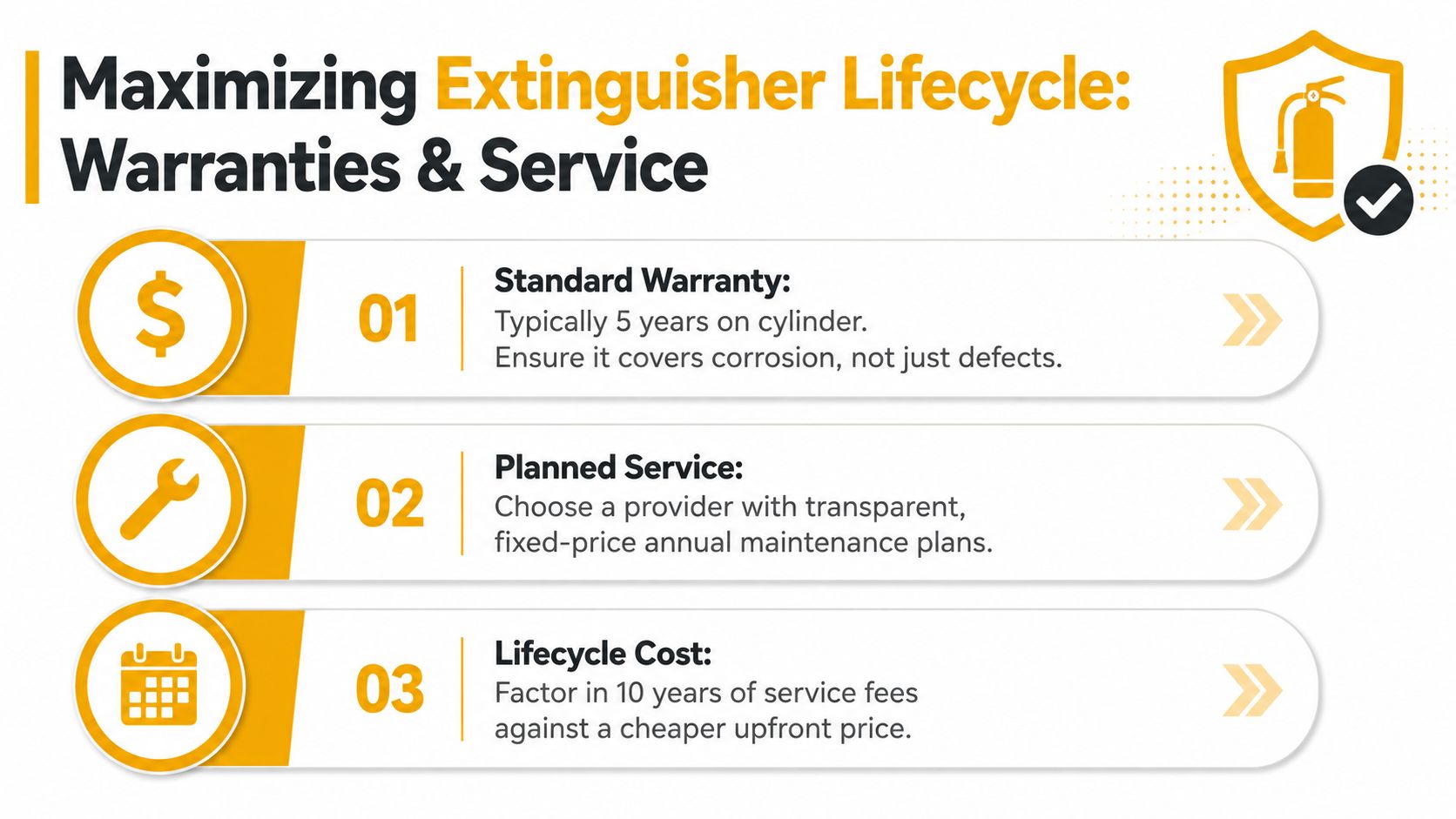
A manufacturer warranty covers defects, cylinder faults, or other issues within the stated terms. It does not replace inspection, tagging, or the maintenance work a Queensland site still has to keep on top of. A cheap online purchase can look fine on day one, then create extra cost later when the unit still needs proper testing, records, and replacement support.
Commercial extinguisher warranties in Australia are usually limited to product defects and workmanship faults. They rarely cover wear from normal use, misuse, corrosion, physical damage, or loss of serviceability after installation. That leaves a gap between what the manufacturer will fix and what the site still has to manage, especially if the extinguisher is exposed to heat, vibration, coastal air, or heavy traffic. The practical question is not just whether the unit is covered, but whether the supplier is prepared to stand behind the product once it is on site.
AS 1851 still governs the recurring maintenance work commercial properties rely on. Portable extinguishers are checked for pressure, damage, seal condition, and access, and those checks often show whether a unit should be replaced rather than kept in service. Warranty terms do not change that. A service plan needs to fit the building's risk profile, the site's access conditions, and the supplier's ability to keep the paperwork clean when an audit lands.
What a service plan should cover
A useful plan should make the next action obvious.
- Scheduled inspections: so nothing slips between audit cycles.
- Re-tagging and records: so the site can show what was done and when.
- Replacement triggers: so damaged, discharged, or unsuitable units are swapped before they become a problem.
- Clear pricing structure: so maintenance does not turn into surprise cost every visit.
- Warranty handling: so any defect claim is managed quickly, with the supplier explaining whether it sits under warranty or normal service work.
A fixed-price annual maintenance arrangement is usually easier to manage than scattered call-outs, especially for properties with multiple tenancies or changing occupancy. It also helps separate warranty work from paid maintenance, which matters when a site assumes every fault should be covered. In practice, warranty can take care of a faulty unit, while the service plan carries the labour, records, and compliance follow-through. That difference affects lifecycle cost more than the unit price on the quote.
Making the Right Fire Extinguisher Purchase Decision
A good extinguisher purchase in Queensland comes down to four things, hazard matching, compliance readiness, supplier accountability, and lifecycle cost. If any one of those is weak, the sale is unfinished no matter how good the unit looked on the quote.
The strongest buying decisions are made by facility managers, body corporate committees, landlords, and business owners who treat extinguishers as part of a managed fire-safety system. They ask who services the equipment, what records will be handed over, how the site is covered during inspections, and whether the supplier understands the standards that govern the work. That's the difference between owning a product and managing a compliant asset.
If you're reviewing extinguisher coverage for a commercial site in North Brisbane, Moreton Bay, the Sunshine Coast, Somerset, or Ipswich, talk to a local provider that can supply, install, test, and maintain the equipment under the relevant Australian Standards. The right decision keeps the site ready for an audit and reduces the chance of last-minute scrambling when a defect turns up.
If your site needs commercial fire extinguisher supply, installation, testing, or an ongoing maintenance plan, Celtic Fire & Security can help coordinate the work across your premises. Visit Celtic Fire & Security to arrange a compliant site review and get the right extinguishers matched to your workplace risk.
No responses yet