
You're standing in a South East Queensland warehouse and the information that should be immediately visible is trapped behind a failing plastic sleeve. The extinguisher label has faded, the inspection record is curling at the edges, and the holder on the switchboard door has cracked around its fixing hole. A simple clear card holder has become a site-control problem.
For facility managers, the issue isn't finding a transparent pocket. It's choosing a holder that keeps identification, permits and fire safety records readable in Queensland heat, humidity, dust and daily handling. The right size, material, opening and attachment method can support a cleaner compliance workflow, while the wrong one becomes another item to replace during an inspection rush.
Table of Contents
- A Familiar Site Moment Most Facility Managers Recognise
- What a Clear Card Holder Actually Is
- Sizes, Materials and Attachment Options Explained
- Common Uses Across Australian Workplaces
- Matching Holder Type to Your Site Environment
- Clear Card Holders and Queensland Compliance
- Buying and Maintenance Checklist for Busy Sites
A Familiar Site Moment Most Facility Managers Recognise
At a Brendale warehouse, a fire warden removed a faded extinguisher identification tag from the wall because the inexpensive PVC sleeve had turned cloudy and brittle in the sun. The card was still technically present, but the extinguisher class and service information were difficult to read through the plastic. That distinction matters on a busy site. A document that exists but can't be read quickly isn't doing its job.
The same problem appeared at the switchboard. A council inspector asked for the current test-and-tag certificate, and the only copy was curling behind a cracked holder on the door. Someone had printed the record, someone had installed it, but nobody had checked whether the holder would remain useful after repeated door movement, moisture and contact with tools.
Practical rule: A holder should protect the information without making the information harder to see.
Gold Coast retail tenancies create a different version of the same headache. An essential services logbook may sit near a plant area or service cupboard in a holder that no longer seals properly. Grease, cleaning chemicals and humidity work their way inside, while staff handling gradually tears the opening. When a contractor or inspector needs the record, the page is damaged and the holder has become a liability.
The practical response is to specify holders as part of the site system, not as an office-supply afterthought. A fire extinguisher inspection guide can help clarify the broader inspection context, but the physical display point still needs its own decision.
This guide focuses on selection, sizing and maintenance. It considers clear card holders for staff identification, visitor control, permits, inspection tags and fire safety information across Brisbane, Moreton Bay, the Sunshine Coast, Ipswich and nearby commercial areas.
What a Clear Card Holder Actually Is
A clear card holder is a transparent sleeve, generally made from rigid or semi-rigid plastic, that protects and displays a printed card, tag or document while keeping it visible. On site, it acts as a small barrier against handling, dust and light moisture. It doesn't replace the card, signage system or maintenance record. It keeps that information in position and easier to inspect.
The first decision is transparency. A fully clear face gives the fastest visual check, which suits identification cards and extinguisher labels. A frosted finish can reduce glare in some reception areas, but it's a poor choice where a worker needs to identify a class marking or read a service note from a short distance.
Orientation comes next. Portrait holders suit ID badges and hard hat cards. Wider holders are usually more practical for equipment labels, cabinet information and broader inspection inserts. The opening also affects performance:
- Top-load openings suit cards that are changed often, such as visitor passes.
- Side-load openings can work where the holder is mounted vertically and the card needs lateral support.
- Sealed edges provide better protection in dusty or damp areas.
- Resealable slits make repeated card changes easier, but they can admit contamination if the closure loosens.
Attachment points determine whether the holder stays with the person or with the asset. Lanyard slots and clip holes suit staff badges. Chain slots and carabiner holes work for permit tags and equipment checks. Hook slots, adhesive backings and fixed plates suit doors, cabinets and walls, provided the mounting surface is clean and appropriate.
Common formats include CR80 ID cards, A6 and A7 signage inserts, and narrower permit tags used on fire equipment. Australian retail specifications commonly place hard-plastic badge holders around 86 × 54 mm, compatible with standard ID formats and lanyards or keychains, as shown in this Australian ID card holder specification.
A card holder isn't the same as a document wallet. A wallet is intended to carry several pages or larger papers. A holder is usually a fixed display or identification accessory. If the task is to show one card clearly at a controlled location, a holder is the better fit. If the task is to store a logbook, certificates and supporting documents together, use a document enclosure designed for that load.
Sizes, Materials and Attachment Options Explained
Size should follow the information being displayed, not the shape of the product catalogue. A CR80 holder is appropriate for an ID badge. A small permit tag needs a compact sleeve that won't flap around on a lanyard or equipment handle. An A6 holder gives more room for maintenance notes, while A7 can suit a smaller sign or inspection prompt.
The material changes the service life. Flexible PVC is inexpensive and easy to handle, but it can crease, haze or split when exposed to sunlight, heat and repeated bending. Polystyrene provides a more rigid face but isn't the first choice where impact and outdoor exposure are major concerns. Polycarbonate is the tougher option for demanding areas. Australian materials data reports clear polycarbonate sheets with 88 to 90% light transmission at 3 mm, service temperatures from −40 to +120 °C, tensile strength of 60 to 70 MPa, and standard UL94 V-2 flammability, with V-0 grades available, according to this Australian polycarbonate materials data.
Acrylic-faced designs can present a clean, rigid appearance in offices and reception areas. They're less forgiving of impact than polycarbonate, so they're better protected from forklifts, tools and rough handling.
Clear Card Holder Options Compared
| Size | Common Material | Attachment Option | Best Site Use |
|---|---|---|---|
| CR80, around 86 × 54 mm | PVC, polystyrene or polycarbonate | Lanyard slot, badge clip or retractable reel | Staff ID and contractor identification |
| A8 permit tag | Flexible PVC or rigid plastic | Chain slot, carabiner hole or clip | Equipment permits and small inspection tags |
| A7 insert | PVC, polystyrene or polycarbonate | Adhesive backing, screws or hook slot | Compact equipment and location signage |
| A6 insert | PVC, polycarbonate or acrylic-faced design | Adhesive-backed plate, screws or magnetic strip | Maintenance notes, service records and log inserts |
The attachment should match the movement around the holder. A retractable reel is convenient at a reception or office entry point, but it can catch on plant and machinery. A bulldog clip back allows quick removal, while a carabiner hole is more secure for a permit tag that travels with a worker. Hook and loop strips support temporary displays, but they need a clean surface and regular checking. Magnetic strips work well on suitable metal doors, though they're not ideal where vibration or unauthorised removal is a concern.
A holder's job changes when these elements are combined. A small flexible sleeve with a lanyard slot is a short-term visitor pass. A rigid polycarbonate holder with fixed mounting points is closer to permanent site signage, particularly where Queensland UV and humidity are part of the exposure.
Common Uses Across Australian Workplaces
Clear holders appear in more workflows than most product listings acknowledge. The important question is whether the holder stays attached, keeps the card legible and allows the authorised person to update the information without damaging the surrounding system.
Staff and contractor ID badges usually use the CR80 format. A portrait holder with a lanyard slot or badge clip suits reception, office and retail environments. In a warehouse, the same badge may need a stronger clip or retractable reel, particularly where workers move between pedestrian areas and storage zones. The card should remain visible without creating a snag point.
Visitor and contractor passes need quick issue and recovery. A top-load holder is useful at a reception desk because staff can insert and remove a printed pass without tools. For a contractor entering a plant room, a clip or lanyard attachment provides a visible connection to the person rather than the building. Flexible PVC is often adequate for short-term use, but the team should discard holders once the opening or attachment point starts to split.
Permit and inspection tags serve a different purpose. Hot work, confined space and electrical isolation controls need clear status information at the point of work. A compact tag format, often around A8 or a similar narrow permit size, suits a lockout point, gate or equipment handle. The holder must be easy to update but secure enough that the tag doesn't fall away during normal movement.
Fire safety information cards include extinguisher identification, hydrant location tags and inspection record slips. An A7 or A6 insert can provide better room for equipment details than a portrait badge sleeve. For practical context on extinguisher and cabinet presentation, see this fire extinguisher and cabinet service information.
Clear Card Holder Uses Across Australian Workplaces
| Use Case | Typical Card Size | Best Orientation | Site Example |
|---|---|---|---|
| Staff ID badge | CR80 | Portrait | Office entry or warehouse access point |
| Visitor pass | CR80 or A7 | Portrait | Reception desk or contractor sign-in |
| Permit tag | A8 or narrow custom tag | Portrait or narrow landscape | Isolation point, plant gate or equipment handle |
| Extinguisher information | A7 or A6 | Landscape | Extinguisher, cabinet or fire point |
| Inspection record slip | A6 | Landscape | Plant room door or services cupboard |
A facility team can reduce stock complexity by standardising around a small portfolio. For example, one CR80 holder can support staff and visitor workflows, while one durable A6 or A7 format can support maintenance and fire information. Standardisation only works if the card stock, mounting point and replacement process are also consistent.
Matching Holder Type to Your Site Environment
A holder suited to a corporate reception desk can fail within months on an exposed warehouse wall. Site conditions should determine the material and fixing method, rather than the lowest unit price.
Retail and hospitality front-of-house areas need tidy presentation and frequent access. A flexible PVC holder with a lanyard, badge clip or retractable reel suits staff and visitor identification. Where grease or cleaning products are present, choose a design that wipes clean without holding liquid around the card.
Corporate offices place less stress on materials. PVC, polystyrene or an acrylic-faced holder can suit ID badges, room information and temporary access cards. Adhesive-backed frames may work on smooth internal surfaces, provided the adhesive matches the wall or door finish and can be removed without leaving a permanent mark.
Warehouses and logistics sites bring impact, dust and constant movement. Rigid polycarbonate is better suited to fixed labels or holders near loading areas, plant rooms and service corridors. Screws or a mechanically fixed plate are more dependable than adhesive alone where vibration, dust or rough contact are expected.
Industrial and construction sites require careful specification. Workers may handle tags with gloves, move through wet areas, or expose them to oils and chemicals. A thicker flexible sleeve can suit temporary permits, while a rigid, UV-stable polycarbonate enclosure is more appropriate for a permanent equipment label. Suppliers often describe flexible plastic thickness in “mils”, but buyers should compare the construction, edge strength and fixing method instead of relying on thickness alone.
Holder Type by Site Environment
| Site Environment | Recommended Material | Recommended Attachment | Key Reason |
|---|---|---|---|
| Retail and hospitality front-of-house | Flexible PVC or acrylic-faced holder | Lanyard, badge clip or retractable reel | Clean presentation and frequent access |
| Corporate office | PVC, polystyrene or acrylic-faced holder | Badge clip, magnetic strip or adhesive backing | Controlled indoor conditions |
| Warehouse and logistics | Rigid polycarbonate | Screws, fixed plate or strong clip | Better resistance to impact and handling |
| Industrial or construction site | UV-stable polycarbonate or durable PVC | Carabiner, mechanical fixing or protected clip | Exposure to dust, moisture, chemicals and movement |
South East Queensland conditions make UV stability important, including semi-outdoor awnings, loading dock approaches and open-sided plant areas. A clear holder may remain transparent while its edges become brittle, so inspect the complete assembly, not only the front face. UV-stabilised polycarbonate grades are relevant where outdoor exposure is expected, but the selected product still needs checking against its intended application.
Clear Card Holders and Queensland Compliance
The holder itself is generally not the regulated item. Its value comes from helping a site keep required information legible, available and associated with the correct equipment.
For fire protection records, maintenance documentation should be managed with the relevant Australian Standards and Queensland requirements in mind. Facilities commonly refer to AS 1851 for routine servicing documentation and AS 2444 for portable fire extinguisher selection and location considerations. A clear holder can protect an inspection slip from handling, light moisture and plant-room grime, but it can't correct an incomplete record or substitute for qualified servicing.
Queensland fire guidance separates fires into Australian classes A, B, C, D, E and F. Class A covers carbonaceous solids such as wood, paper, plastics and rubber. Class B covers flammable and combustible liquids, Class C combustible gases, Class D combustible metals, Class E energised electrical equipment, and Class F cooking oils and fats. The Queensland extinguisher guidance also uses Australian colour references, including wet chemical as previously beige and foam as previously blue.
That local terminology matters on signage. Queensland's practical matrix identifies water for Class A only, foam for Classes A and B, dry chemical powder AB(E) for A, B and E, dry chemical powder B(E) for B and E, carbon dioxide for B and E, and wet chemical for F. A holder should keep the selected card visible, but the card must still match the equipment and hazard.
A clear sleeve supports compliance evidence. It doesn't create compliance by itself.
Queensland occupiers also have a maintenance responsibility. The state's fire safety management advisory notes state that prescribed fire extinguishers must be maintained in accordance with QDC MP 6.1 and by an appropriately qualified person. That makes the displayed record part of a wider process involving inspection, testing and recordkeeping.
A torn or faded certificate can slow an audit because the information is harder to verify. A properly selected holder helps preserve the document's condition, keeps it visible on the plant-room door or fire equipment point, and makes the site's maintenance system easier to follow. Further practical context is available in this guide to fire safety inspections.
Buying and Maintenance Checklist for Busy Sites
Treat clear card holders as managed site stock. Start by grouping the required holders by environment, such as warehouse, retail floor, plant room and reception. The same product may not suit every location, so record the intended card size, orientation, material and fixing method before asking for a bulk price.
Specify before ordering
- Confirm the card format: Match the holder to CR80, A8, A7, A6 or the actual custom tag dimensions.
- Check the opening: Use top-load access for frequently changed visitor cards and more protected openings for fixed records.
- Choose the attachment: Select lanyards, clips, carabiners, screws, magnetic strips or adhesive backing according to movement and surface.
- Separate environments: Don't use a reception-grade PVC sleeve for an exposed warehouse or plant-room position.
- Record the SKU: Link each holder model to the location, signage register and replacement description.
Inspect installed holders during routine site checks. Look for UV haze, yellowing, cracking, split lanyard slots, loose adhesive and sharp broken edges. Wipe the face and confirm that the extinguisher class, equipment number and inspection information remain readable through the plastic.
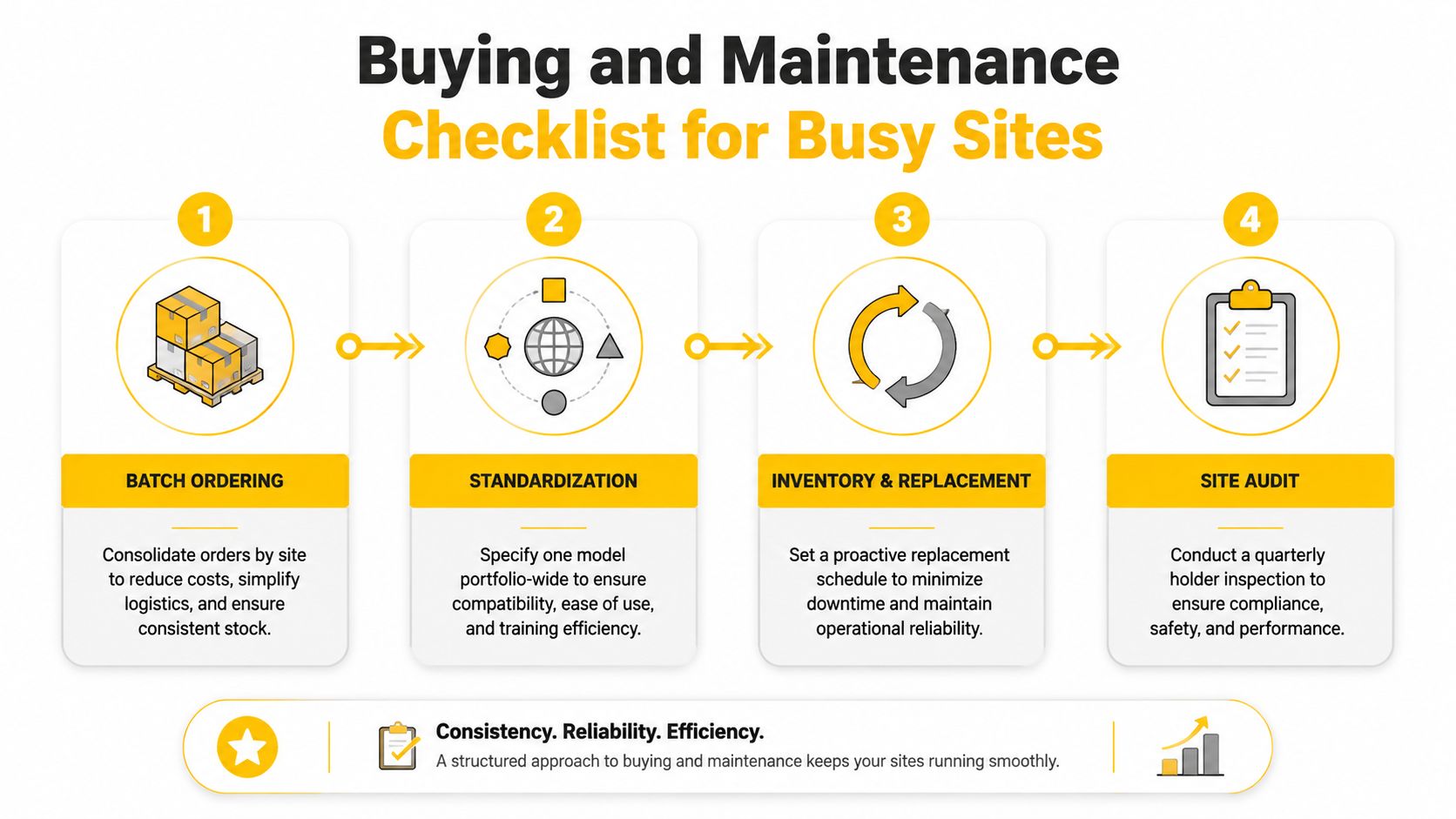
Keep a small spare stock for common failures and contractor damage. Replacing one cracked holder during scheduled work is simple. Discovering the problem during a Queensland fire safety inspection creates avoidable pressure, especially when the original product, card format or attachment hardware is no longer known.
For multi-site portfolios, use location codes and a basic replacement schedule. Record which holder protects each sign or inspection slip, note the environment, and keep the matching cards with the relevant signage register. That approach turns a low-cost accessory into a controlled part of the site's documentation workflow.
Celtic Fire & Security supplies, installs, tests and maintains commercial fire protection, electronic security and locksmith systems across North Brisbane, Moreton Bay, the Sunshine Coast, Somerset and Ipswich. If your clear card holders form part of a wider extinguisher, signage or inspection workflow, visit Celtic Fire & Security to arrange practical onsite support aligned with Australian Standards and Queensland requirements.
No responses yet