
A café manager finds a small pan fire starting beside the fryer. The nearest extinguisher is a dry powder unit, but the label is hard to read and nobody is sure whether it's suitable for burning cooking oil. In a workshop nearby, the same-looking cylinder sits beside solvents and electrical equipment. The two sites need different decisions, even if both owners ask for “a dry chemical extinguisher”.
That's the point most generic buying guides miss. Dry chemical describes the agent inside the cylinder, not one universal extinguisher. In Queensland, the right unit depends on the fire classes present, its rating, where it's installed, and whether the maintenance record proves it's ready.
Table of Contents
- What a Dry Chemical Fire Extinguisher Does in a Queensland Workplace
- How Dry Chemical Powder Works and the Two Main Variants
- Matching the Extinguisher to Australian Fire Classes
- Australian Standards That Govern Selection, Placement, and Build Quality
- Servicing Rhythm Under AS 1851 for Commercial Sites
- What Happens After the Pin Is Pulled
- Choosing the Right Setup for Different Queensland Businesses
- Key Takeaways and Next Steps for Your Site
What a Dry Chemical Fire Extinguisher Does in a Queensland Workplace
A dry chemical extinguisher stores a fine powder that's expelled under pressure through a hose or nozzle. The powder interrupts the combustion process and knocks down flames quickly, which is why it's common in workshops, warehouses, retail premises, offices and other commercial settings.
Australia has regulated portable fire extinguishers for nearly five decades. The first mandatory standard was declared in 1978 after authorities found poorly designed and badly manufactured extinguishers that couldn't reliably extinguish small fires. The current framework includes the Consumer Goods Portable Non-aerosol Fire Extinguishers Safety Standard 2021, which strengthened requirements for performance, testing, filling tolerances and labelling.
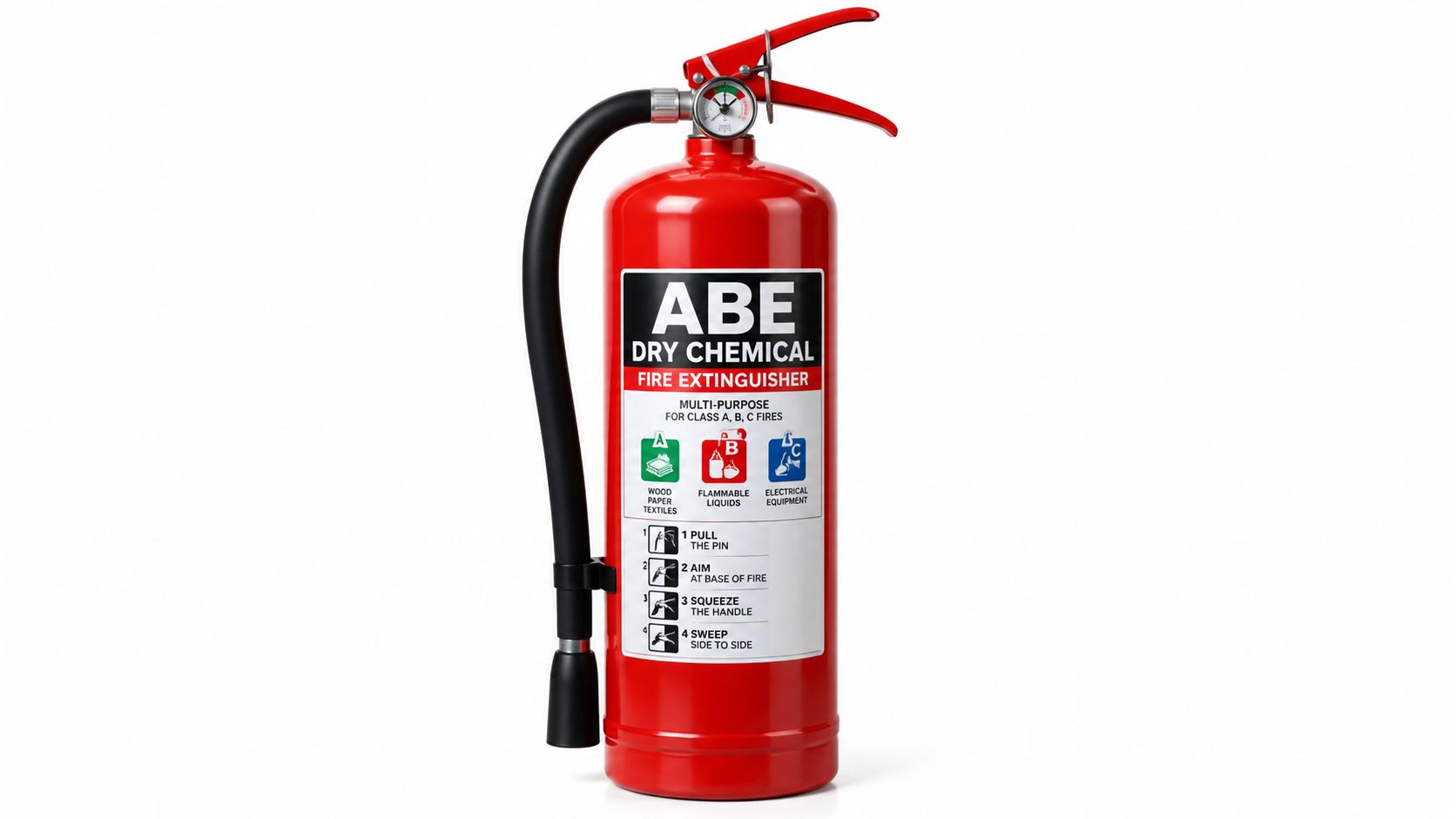
The cylinder size isn't the selection method
On Australian brackets, you'll commonly see dry powder cylinders from 1 kg through to 9 kg. Weight tells you how much agent is carried, but it doesn't tell you whether the unit matches the hazard or provides the necessary fire rating.
The same red cylinder shape can contain:
- ABE powder, intended for Class A combustibles, Class B flammable liquids and electrical risks.
- BE powder, intended for Class B flammable liquids and electrical risks, but not Class A materials.
- Specialist powders, selected for particular hazards such as combustible metals.
That distinction matters in a Queensland workplace. A 9 kg BE unit isn't automatically a better choice than a smaller ABE unit if cardboard, timber or textiles are part of the fire load. Likewise, an ABE extinguisher isn't the right answer for every kitchen, metalworking area or chemical store.
Practical rule: Start with the hazard assessment, then select the agent and rating. Don't start with the nearest bracket or the heaviest cylinder.
A commercial site also needs more than a cylinder on the wall. The equipment must be correctly selected, accessible, identified, inspected and serviced. A dry chemical fire extinguisher is useful protection only when those decisions work together.
How Dry Chemical Powder Works and the Two Main Variants
Think of a fire as a three-legged stool. Remove one leg and the fire collapses. Dry chemical powder attacks the combustion reaction itself, spreading through the flame zone and interrupting the process that keeps the fire burning. It can knock flames down rapidly, but it doesn't remove the fuel or guarantee that hot material won't reignite.
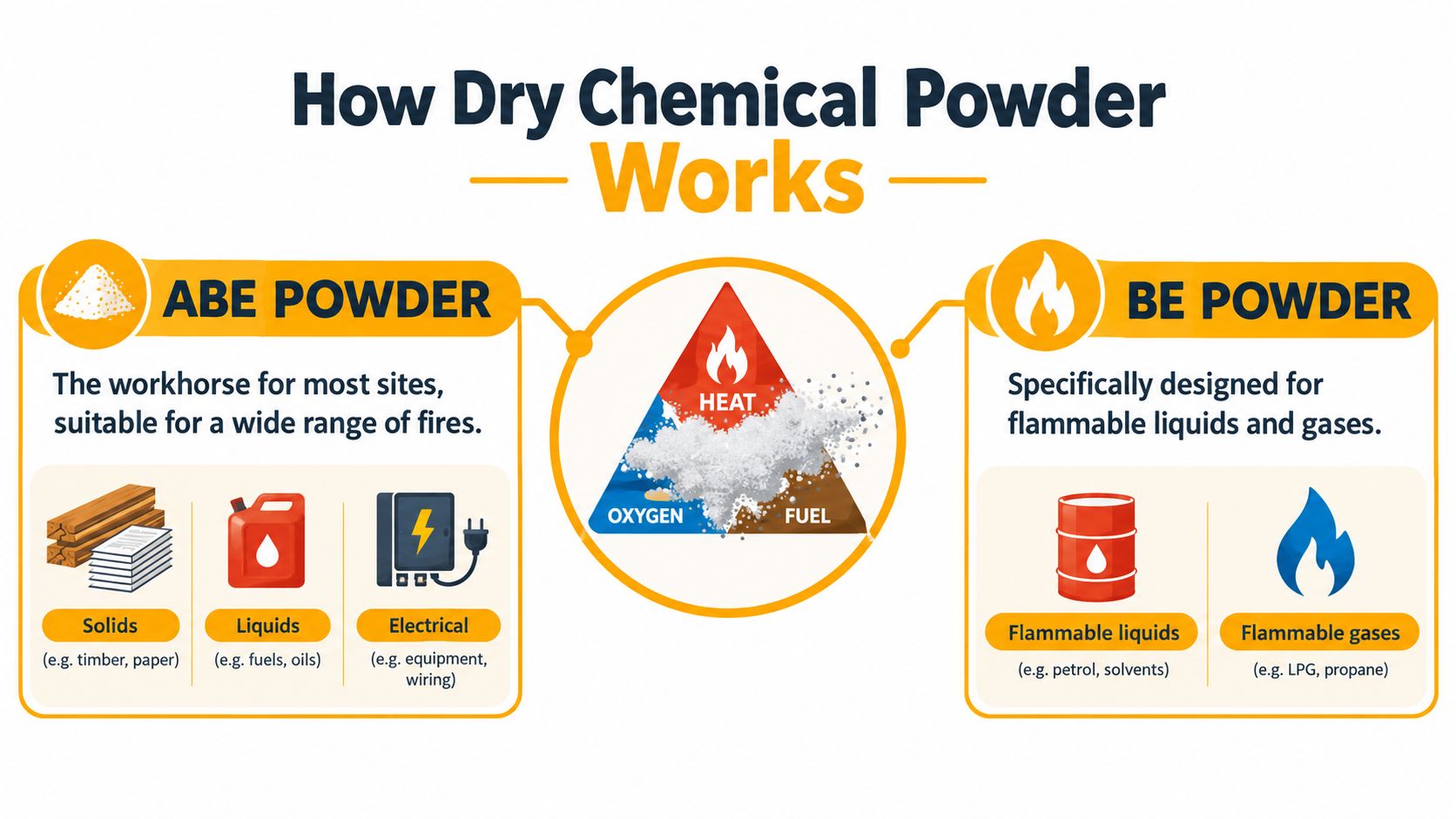
ABE powder is the broader workplace option
ABE powder is designed for:
- Class A, involving ordinary combustibles such as wood, paper and textiles.
- Class B, involving flammable liquids.
- Electrical risks, where energised equipment is involved.
Queensland Fire Department identifies dry chemical powder, including AB(E) units, as suitable for many household and workplace fire risks. The classification and rating still need to match the particular premises. A warehouse storing cartons, a workshop using solvents and a switchboard area may all use ABE coverage, but their location and quantity decisions won't necessarily be identical.
The ABE label is more useful than the phrase “dry powder”. It tells you the unit has been selected for a broader group of Australian fire classes.
BE powder has a narrower job
BE powder covers Class B flammable liquids and electrical risks. It's appropriate where Class A materials aren't part of the hazard assessment, such as some fuel, solvent and machinery areas.
Australian cylinders commonly use a white band to identify AB(E) dry chemical units. The band is a useful field cue, but it isn't a substitute for reading the label, confirming the rating and checking the site schedule. Paint colour and cylinder shape can't tell you everything inside.
Powder can settle or compact, particularly where equipment experiences vibration or is left unattended. Queensland Fire Department recommends monitoring the gauge, occasionally shaking the extinguisher to reduce settling and arranging professional pressure testing every five years. A gauge in the normal zone doesn't prove that the agent, hose, valve and internal tube will perform correctly.
Matching the Extinguisher to Australian Fire Classes
The most common selection error is treating an ABE dry chemical extinguisher as an all-purpose answer. It covers several important risks, but Australian fire classes still need to be identified separately. The Country Fire Authority guidance on business fire extinguishers distinguishes ABE from BE and confirms that Class F cooking fires need a different approach.
| Australian fire class | ABE dry chemical powder | BE dry chemical powder | Better option elsewhere |
|---|---|---|---|
| Class A, wood, paper and textiles | Suitable when the rating matches the hazard | Not suitable | Water or foam may be selected where appropriate |
| Class B, flammable liquids | Suitable | Suitable | Foam may suit some liquid hazards |
| Electrical risks | Suitable for energised equipment | Suitable for energised equipment | CO₂ may be considered for sensitive equipment, subject to the risk assessment |
| Class F, cooking oils and fats | Not the correct selection | Not the correct selection | Use a dedicated wet-chemical or other approved Class F extinguisher |
| Combustible metals | Not a general solution | Not a general solution | Use specialist metal-fire powder selected for the specific metal |
Class F is where generic advice causes trouble
A commercial kitchen with a deep fryer has a cooking-oil hazard. Dry powder may knock down visible flames, but it isn't the standard answer for a Class F fire. The correct setup requires an extinguisher approved for that cooking hazard, with placement that allows staff to reach it without standing over the fryer.
Water is also dangerous on burning oil. It can spread the burning oil and increase the incident rather than controlling it. The extinguisher schedule should therefore identify the cooking line separately from general electrical and packaging risks.
Metal fires require specialist selection
Combustible metals create another gap in basic buying advice. Magnesium swarf, aluminium dust and other metal hazards may need a specialist powder selected for the material involved. An ordinary ABE or BE cylinder should not be treated as a metal-fire extinguisher just because it contains powder.
The label colour isn't the decision. The risk assessment should record the materials present, the Australian fire class, the extinguisher designation and the required rating.
Australian Standards That Govern Selection, Placement, and Build Quality
A compliant Queensland installation isn't created by buying a cylinder that looks Australian. Three standards connect the product, the location and the maintenance regime.
AS/NZS 1841.1 addresses the extinguisher itself
AS/NZS 1841.1:2007 sets general requirements for portable extinguishers, including materials, design, construction, manufacturing methods, performance, associated gas containers, instructions and markings. Queensland Fire Department identifies it as the applicable general product standard.
That gives a manager a practical first check. The extinguisher needs the correct Australian markings, a readable label, the correct agent designation and a rating that supports the site's hazard assessment. A generic imported powder cylinder without the required markings isn't made compliant by mounting it beside an Australian unit.
AS 2444 connects hazards to location
AS 2444 governs the selection and location of portable extinguishers and fire blankets. It deals with classification and rating, location, distribution and potential hazard classification.
On site, this means the installer considers travel paths, access, visibility, mounting, signage and the way people move through the area. A suitable extinguisher hidden behind stock or positioned inside a locked room isn't useful protection. Neither is a unit placed beside the hazard where a person has to approach the fire before reaching it.
This guide to Australian fire extinguisher standards provides a useful reference for understanding how the standards fit together.
AS 1851 keeps the installation ready
AS 1851-2012 provides the routine-service framework, including six-monthly inspections for portable fire extinguishers. It turns the installation from a one-off purchase into a documented maintenance programme.
A Queensland manager should expect the site documentation to identify the extinguisher locations, agent classifications, cylinder identification, ratings and service work completed. The installation and service records should point to the relevant standards, not merely state that the units were “checked”.
A compliant extinguisher schedule should answer four questions quickly: what hazard is present, which unit covers it, where is that unit located, and when was it last serviced?
Servicing Rhythm Under AS 1851 for Commercial Sites
A dry chemical fire extinguisher can look untouched while its pressure, powder condition or internal components deteriorate. That's why Australian commercial practice uses a recurring service rhythm rather than relying on the date of installation.
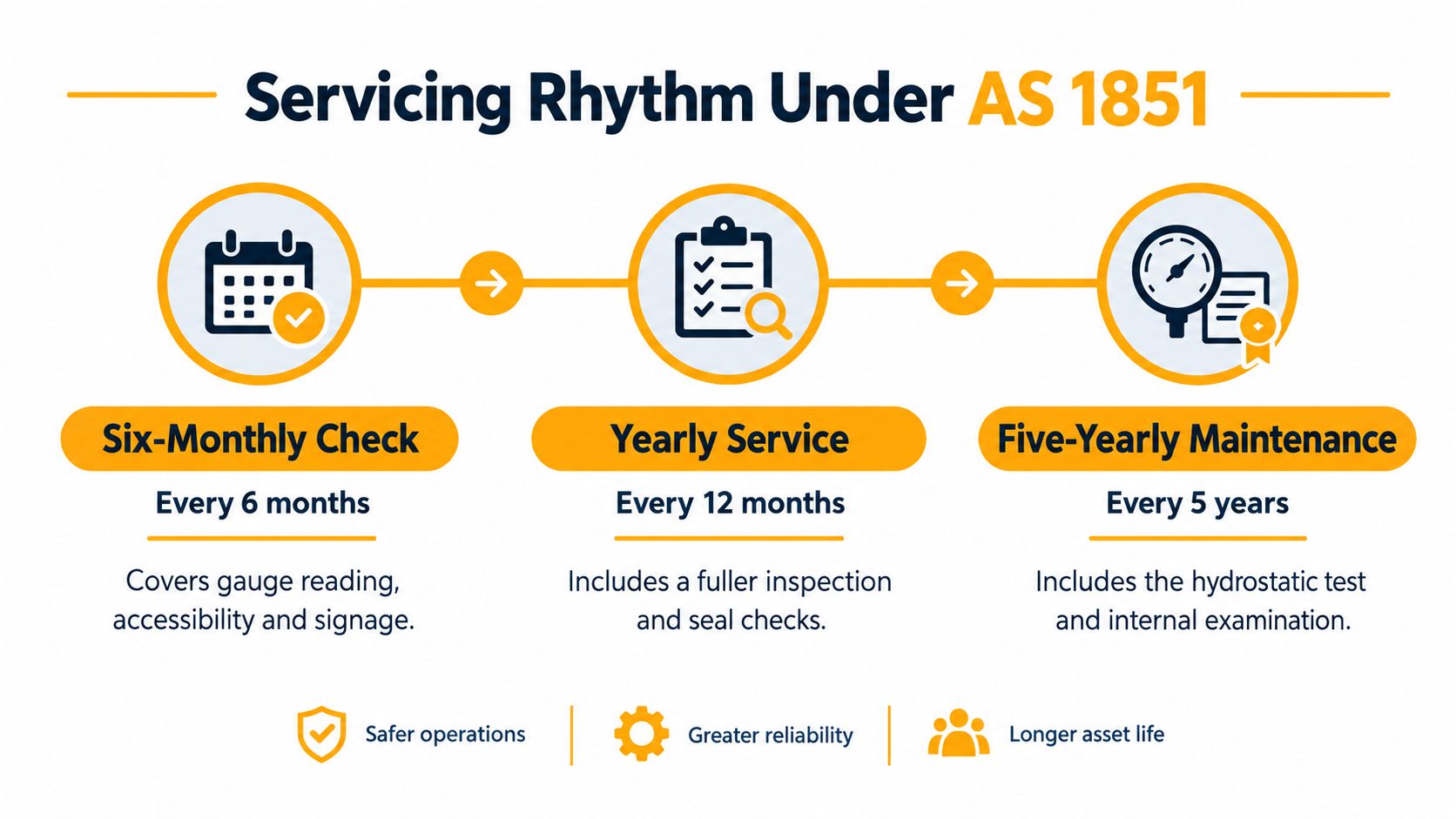
The Australian Building Codes Board material on portable extinguisher service intervals summarises the six-monthly, yearly and five-yearly stages reflected in AS 1851. The exact work must be completed by an appropriately accredited or licensed provider.
Six-monthly site checks
The six-monthly inspection is the regular readiness check. It should identify problems that can stop a person using the unit when a fire starts:
- Gauge position: Confirm the pressure indication is in the serviceable range.
- Access: Make sure stock, vehicles or furniture haven't blocked the extinguisher.
- Condition: Look for corrosion, impact damage, leaks, hose damage and missing parts.
- Identification: Confirm signage, labels and the agent designation remain legible.
- Security: Check the pin and tamper seal.
Queensland's WorkSafe guidance for service stations gives a practical example. It notes that dated maintenance records are required under section 359 of the Queensland Work Health and Safety Regulation and that a yellow maintenance tag typically records servicing every six months for portable extinguishers.
Yearly and five-yearly work
The yearly service goes further than a quick visual check. The provider examines the unit more thoroughly, checks internal condition and confirms the powder and components remain suitable for service.
At the five-year stage, the cylinder is pressure-tested, the contents are removed and replacement extinguishing agent is provided. This is critical because a normal gauge reading can't confirm that settled powder will discharge correctly or that the cylinder and internal parts remain sound.
The maintenance record should identify the location, classification, cylinder details and completed tasks. Keep the tag, logbook and service documentation together so an auditor, site manager or emergency responder can establish the unit's history.
The cost of a service programme depends on the equipment and site requirements. This commercial fire extinguisher maintenance guide explains the practical factors that affect scheduled work without reducing compliance to a simple refill price.
What Happens After the Pin Is Pulled
The fire is out, but the job isn't finished. Dry powder spreads well beyond the visible flame area, entering machinery, electrical equipment, ventilation paths, food-preparation surfaces and sensitive electronics.
Start by isolating the affected area and making sure the fire hasn't reignited. Don't return the extinguisher to its bracket just because only part of the cylinder was discharged. Australian fire-safety guidance states that even a partial discharge requires the unit to be refilled by a registered service organisation.
Treat the residue as an operational problem
Powder residue can contaminate equipment and create a difficult cleanup, particularly around motors, switchboards, computers, production machinery and commercial kitchens. The cleanup method should follow the product safety data sheet and the requirements of the affected equipment. Some machinery may need inspection before it's energised again.
A sensible post-discharge response includes:
- Scene control: Keep people away until the fire area and atmosphere are safe.
- Equipment isolation: Disconnect affected machinery and electrical equipment before cleanup.
- Condition assessment: Check whether heat, powder or moisture has damaged components.
- Professional service: Remove the discharged unit from service for refill and inspection.
- Documentation: Record the incident, the extinguisher location, the discharge and the replacement action.
A partially discharged cylinder has an unknown remaining charge and may have drawn contamination into the valve or hose. Cleaning the outside and putting it back isn't a service method.
Plan for disposal as well as refilling
Some cylinders should be refilled. Others may be damaged, corroded or no longer suitable for service. Disposal arrangements vary by state, and Fire and Rescue NSW advises using appropriate recycling channels for old extinguishers while warning that discharged units need professional attention. Its guidance on recycling fire extinguishers is useful, but Queensland businesses should confirm local requirements before disposing of a cylinder.
The total cost of a discharge includes cleanup, equipment inspection, replacement coverage, servicing, documentation and possible downtime. The basic use procedure is covered in this guide to using a fire extinguisher, but the site still needs a plan for what happens afterwards.
Choosing the Right Setup for Different Queensland Businesses
The right setup changes with the hazard. A compact office, a fryer kitchen and a fuel forecourt shouldn't receive the same extinguisher schedule just because all three can buy red cylinders.
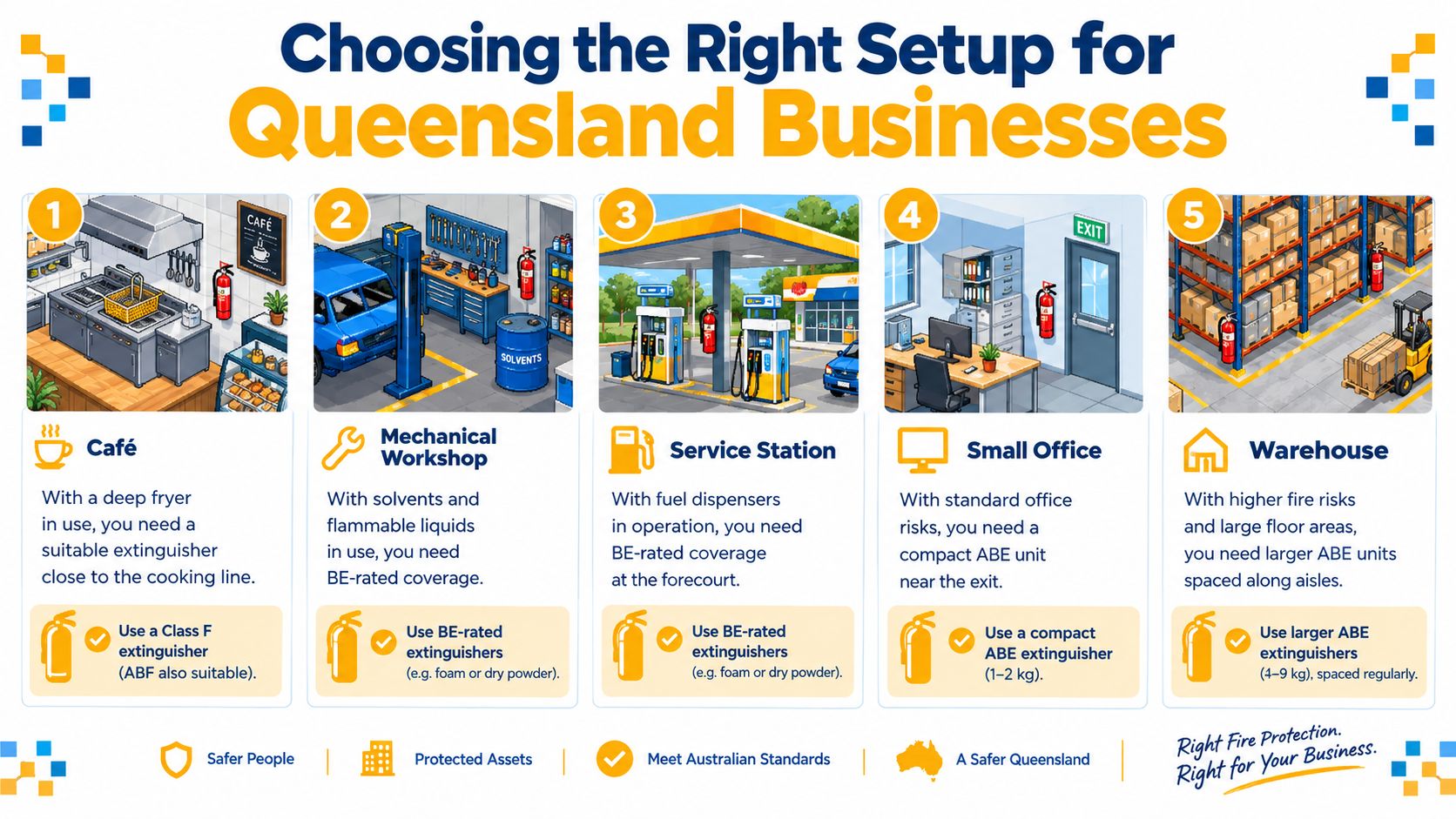
Café with a deep fryer
The kitchen needs a dedicated Class F solution near the cooking line. ABE powder may still be relevant for general packaging, electrical and ordinary combustible risks elsewhere, but it shouldn't replace the cooking-oil extinguisher.
Rule of thumb: Separate the fryer hazard from the café's general fire risks.
Mechanical workshop with solvents
A workshop may have flammable liquids, electrical tools, gas cylinders, timber benches and stored packaging. BE coverage may suit a defined solvent or machinery zone where Class A materials aren't present, while ABE units may be needed for mixed work areas.
Rule of thumb: Record the liquid and electrical risks, then check whether ordinary combustibles require ABE rather than BE.
Service station with fuel dispensers
WorkSafe Queensland's service-station guidance gives a concrete arrangement of at least two 9 kg ABE powder extinguishers near fuel dispensers, or at least one extinguisher for each dispensing bay. The same guidance requires dated maintenance records under section 359 of the Queensland Work Health and Safety Regulation.
Rule of thumb: Treat the forecourt as a documented fuel hazard, not as a general retail area.
Small office
An office commonly has paper, furnishings, computers and electrical equipment. A correctly rated ABE extinguisher near an accessible exit may provide practical coverage, subject to the site assessment and AS 2444 placement requirements.
Rule of thumb: Keep the unit visible and accessible on the escape path, not hidden in a storeroom.
Warehouse with mixed goods
A warehouse may contain cartons, timber pallets, forklifts, batteries, aerosols, solvents or gas cylinders. The schedule may need several agent types and ratings, with ABE units positioned along travel routes and specialist equipment added for specific hazards.
Rule of thumb: Map the stored goods and processes before deciding the number, size or agent.
Key Takeaways and Next Steps for Your Site
A dry chemical fire extinguisher is a site-specific compliance decision, not a universal product category. The useful questions are practical:
- What can burn? Identify Class A materials, flammable liquids, gases, electrical equipment, cooking oils and combustible metals.
- Which powder fits? Choose ABE, BE or a specialist agent according to the hazard, not the cylinder colour.
- Where should it go? Apply AS 2444 to selection, rating, location, distribution, access and signage.
- Does the product comply? Check the construction, performance, markings and instructions against AS/NZS 1841.1:2007.
- Can you prove readiness? Keep AS 1851 service records, yellow tags, logbooks and replacement documentation organised.
Queensland workplaces should expect portable extinguishers to be inspected at six-monthly intervals, with yearly and five-yearly service activities where applicable under the maintenance framework. A gauge check alone isn't enough. Powder condition, corrosion, access, labelling, seals and the match between ABE or BE coverage and the current site hazard all matter.
Walk the premises with the current extinguisher schedule in hand. Compare every cylinder with the hazard in front of it, confirm that access and signage remain clear, then arrange a professional assessment where the classification, rating or service history is uncertain. That process gives a business an equipment list that is easier to maintain, explain and defend during a compliance review.
Celtic Fire & Security supplies, installs, tests and maintains commercial fire extinguishers, including scheduled inspections, tagging, compliance records, refilling and pressure testing. For a Queensland site assessment covering extinguisher selection, AS 2444 placement and the AS 1851 servicing schedule, contact Celtic Fire & Security to arrange practical support for your premises.
No responses yet