

You're standing in a staff kitchen, the pan's smoking, and someone's reached for the wrong thing. This is the moment a fire blanket earns its place on the wall, because the right action is quick, calm, and controlled, not improvised. In Queensland workplaces, the value of a blanket is simple, it smothers small, contained fires by cutting off oxygen, which is why technique and judgement matter just as much as the equipment itself.
Table of Contents
- When to Reach for a Fire Blanket in Your Workplace
- The Correct Way to Deploy a Fire Blanket
- Critical Decision Making Before You Act
- After the Fire Is Covered What Next
- Fire Blanket FAQs for Queensland Businesses
When to Reach for a Fire Blanket in Your Workplace
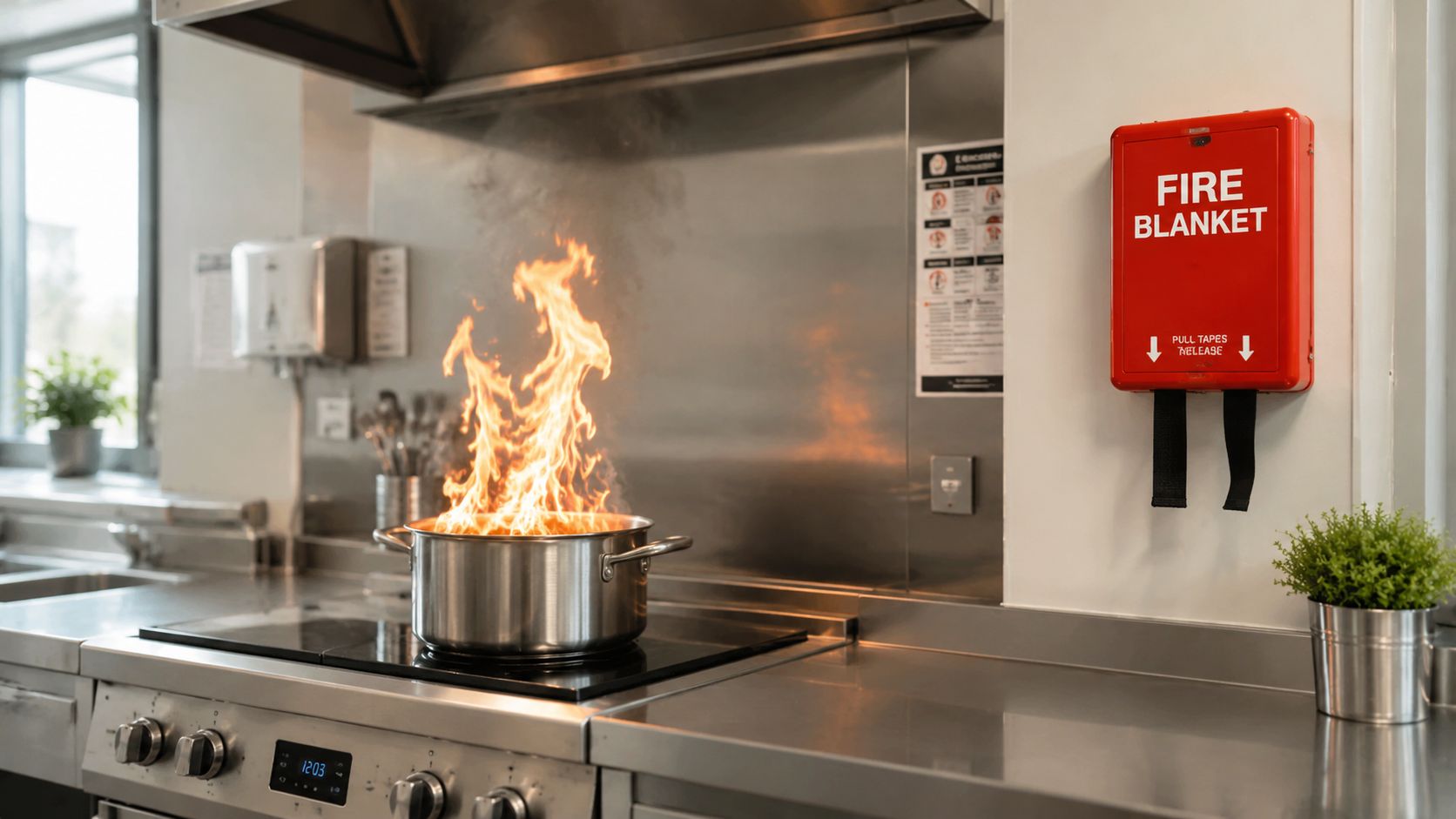
A small oil flare-up on a stovetop can look manageable for a second, then spread fast enough to catch a rushed hand. That's the type of incident where a fire blanket is meant to be used, especially for small cooking fat fires and other small, contained fires in the workplace. Australian guidance also treats the blanket as a smothering device, not a tool for moving the pan around or trying to stir the fire out.
What it's for and what it isn't
A blanket is the right first-response option when the fire is small, localised, and reachable without leaning over flame. That includes the kind of cooking fire that starts in a pan, because the blanket can seal the surface and starve the flames of oxygen. It is not the tool for a fire that has already spread beyond the pan, moved into surrounding combustibles, or made the exit route unsafe.
That practical limit matters in kitchens, break rooms, food prep areas, and lunch spaces where staff often want something faster than waiting for the fire brigade. It also matters in compliance planning, because a team that knows the limits of its equipment is far less likely to make a bad second decision under pressure. If you're reviewing the rest of your first-response gear, the role of a blanket sits alongside portable extinguishers, not in place of them, and this resource on portable fire extinguishers sits in that same preparedness mindset.
Practical rule: if the fire is already bigger than the blanket, the answer is not “try harder”, it's to get out, raise the alarm, and call emergency services.
Where it fits in the fire plan
A good workplace plan makes the blanket the obvious choice for a narrow set of incidents. That keeps staff from reaching for water on a fat fire, or trying to improvise when the safest move is to isolate the area and evacuate. It also helps supervisors train the team around containment, because the blanket works best when the fire is still small enough to cover completely and the heat source can be shut down safely.
The Correct Way to Deploy a Fire Blanket
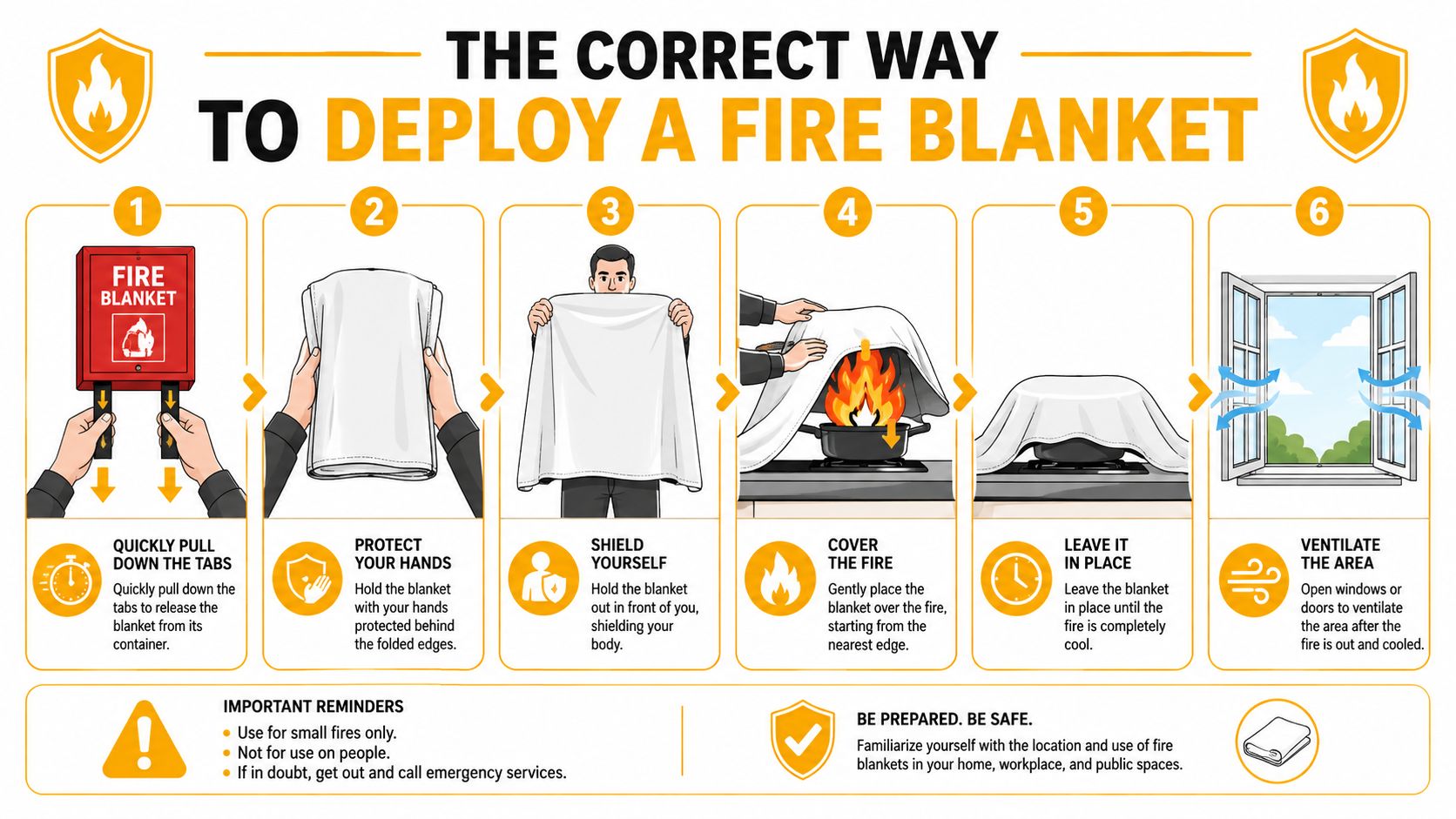
Using a blanket is a physical action, and the motion needs to stay deliberate from the moment you open the cabinet. The sequence used in Australian guidance is simple enough to remember under stress, pull the tabs, shield your body, walk in slowly, and place the blanket over the burning item without throwing it. That controlled approach is what lets the blanket do its job, because the aim is oxygen starvation, not force.
Before you touch the fire, grab the blanket by the tabs and pull it free of the container. Hold it out in front of you like a shield so your hands sit behind the fabric edges, then move towards the fire at a slow, steady pace with your arms extended. The blanket needs to land flat over the flames and the surrounding fuel surface, because partial coverage can leave enough oxygen for re-ignition.
The key is placement, not aggression. If you fling it, you can splash burning fat, shift a pan, or expose more surface to air. If the fire is in a cooking vessel, lower the blanket over the pan so it seals the top as neatly as possible, and only turn off gas or electricity if it's safe to do so without reaching through flame.
If the blanket is already mounted near the exit, use that location to keep your path clear. That placement supports a safer retreat after deployment and lines up with how fire training for extinguishers should be treated in a broader site drill, where the team practises equipment use without crossing into the hazard zone.
Here's the part that trips people up most often. A blanket isn't meant to be pressed into burning oil, because that creates movement in the fuel and can spread the fire. It isn't meant to be dragged across the pan either, because you want a flat seal over the flames, not a sweeping motion that leaves gaps.
Keep your hands behind the fabric, keep your body out of the heat path, and keep the blanket flat once it lands.
That's the practical standard I'd expect a trained staff member to follow in a Queensland workplace. Calm movement, full coverage, and no lifting once the blanket is down unless the fire has fully cooled and the area has been assessed.
Critical Decision Making Before You Act
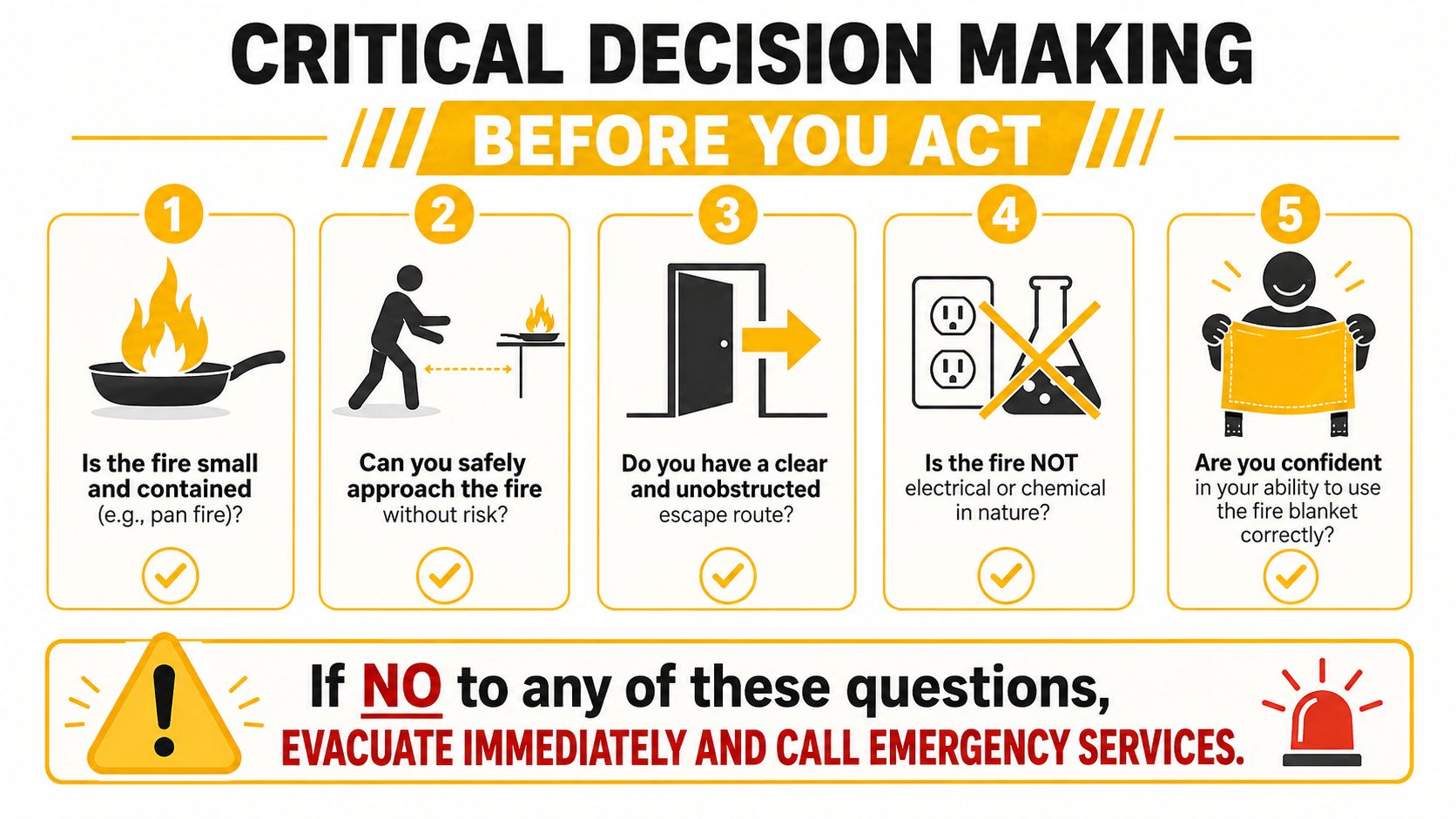
A fire blanket is only the right tool when the fire is still small enough to cover and the heat source can be made safe without putting the operator at risk. In Queensland workplaces, that call has to be made fast and calmly, because once the fire is beyond a contained pan or a very small spot fire, the safer move is to evacuate and get emergency help. The first question is not where the blanket hangs, it is whether the situation still allows a controlled response.
The go or no-go check
Before anyone moves in, three checks need a yes. The fire must still be small and contained, such as a pan fire, not one that has already spread to nearby benches, walls, or equipment. The approach path has to stay clear, with no need to walk through smoke or heat. The fuel source must also be reachable and able to be isolated safely, without reaching over flame.
If any one of those checks fails, the correct response is to leave the area and call emergency services. That is sound judgement, because a fire blanket only works in the narrow window where smothering will still control the fire. The same go or no-go thinking applies when deciding whether to use a fire hose reel, where a poor choice can put staff closer to danger and make the fire harder to control.
A short check keeps the decision clear.
- Is the fire still smaller than the blanket? If not, do not start.
- Can you reach it without moving through heat or smoke? If not, leave.
- Can you shut off the gas or electricity safely? If not, do not reach for the controls.
- Do you know where the blanket is and how it opens? If not, evacuation is safer.
- Is it clearly a cooking fat fire or another very small contained fire? If not, escalate.
If the fire does not look clearly manageable, get out and raise the alarm.
Why that judgement matters in real workplaces
In a commercial kitchen, a poor first move can turn a small incident into a bigger one in seconds. Facility managers should make that decision rule part of induction and refresher training, because people under pressure often default to action even when backing out is safer. A blanket is useful only when the person using it has enough space, enough visibility, and enough confidence to place it properly.
After the Fire Is Covered What Next
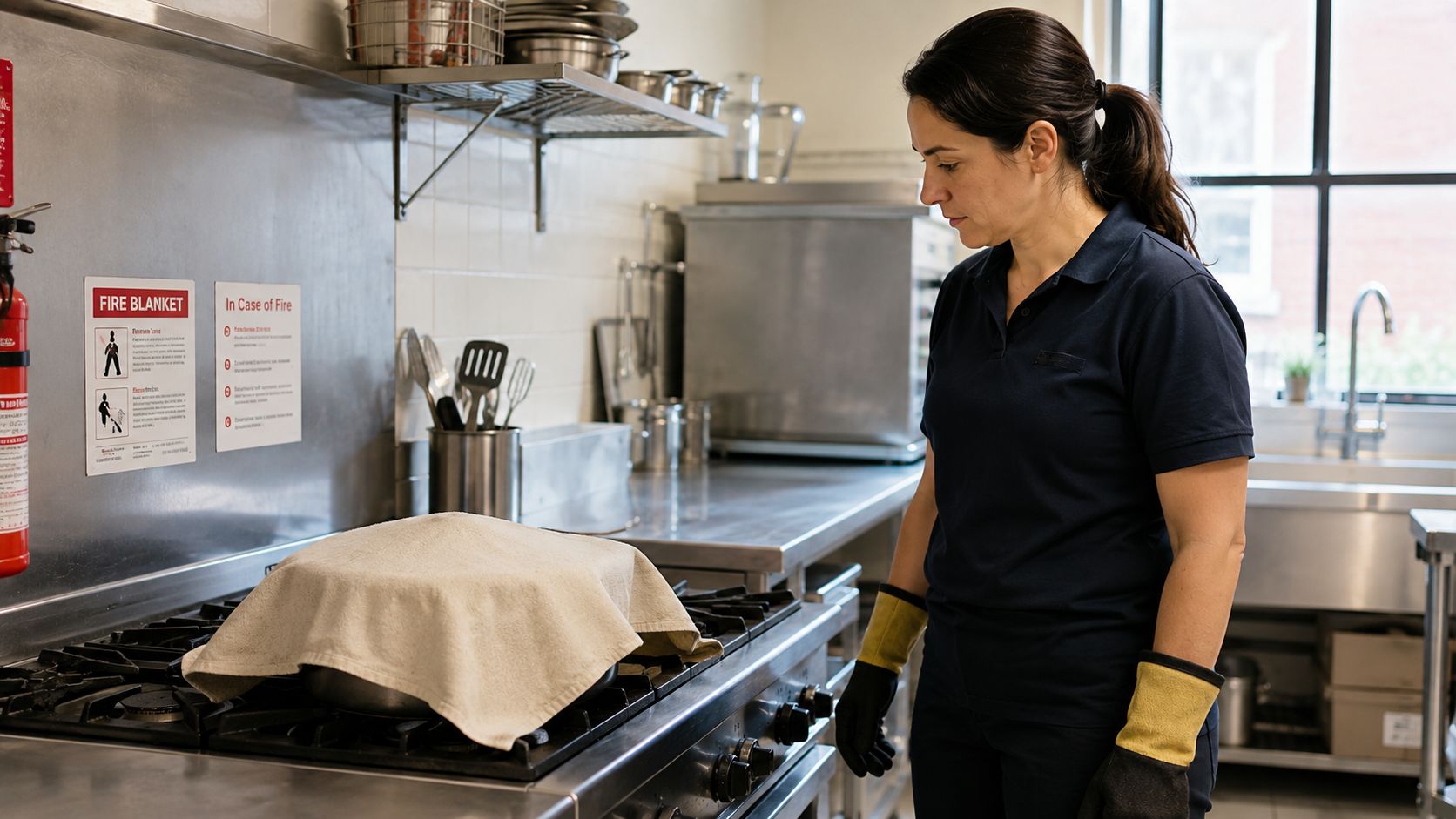
Once the blanket is on the fire, the job isn't finished. The main risk after coverage is re-ignition, because hot oil, fat, or the cookware itself can still hold enough heat to flare again if the blanket is lifted too early. Australian guidance varies on the waiting period, with Queensland Fire and Emergency Services advising at least 15 minutes or until the heat has dissipated, while other Australian services instruct people to leave it in place for at least 30 minutes.
That variation doesn't change the practical rule, the fire has to be fully cooled before anyone removes the blanket. Fire and Rescue NSW says to leave it in place for at least 30 minutes, and the CFA advises waiting at least 15 minutes or until the heat has gone. The reason is straightforward, the blanket is smothering the fire by cutting off oxygen, and if you lift it while the fuel is still hot enough, the fire can come back when air reaches it again.
What to do while it cools
Keep people away from the area and don't test the blanket with a hand or a tool. If it's safe, isolate the power or gas supply, then leave the blanket undisturbed so heat can dissipate. Open the area only when you're confident the fire has stopped and the surface has cooled enough that removal won't create a fresh oxygen rush.
Once the incident is over, treat the blanket as used safety equipment, not something to fold up and rehang. At least one Queensland guide states that a used blanket must be disposed of according to local regulations and replaced, because its fire-resistant performance is compromised after one use. That replacement step needs to be written into your incident procedure, not left to memory or goodwill.
What a manager should record
Document the location, what burned, who responded, and whether emergency services were called. If the fire involved cooking oil, was hard to control, or left any doubt about hidden heat, the safer move is to have the area checked before reopening it to staff. In a busy commercial site, the difference between a clean close-out and a repeat incident is usually the quality of that post-fire response, not the initial smothering itself.
Fire Blanket FAQs for Queensland Businesses
Do fire blankets need regular inspection
Yes, they need to be included in your workplace inspection and maintenance system, alongside the other fire equipment on site. In practice, that means checking that the blanket is accessible, identifiable, and not damaged or blocked, and making sure your servicing records are kept current under your site maintenance program. For most facility managers, the useful question isn't whether the blanket exists, it's whether staff can reach it immediately and use it correctly when the moment comes.
Can a blanket be reused after a fire
No. A used blanket should be disposed of according to local regulations and replaced with a new one, because its fire-resistant properties are no longer reliable after exposure to heat. This replacement is essential, just like replacing any other safety item that's already done its job in an incident.
How does it differ from a fire extinguisher
A fire blanket smothers a fire by sealing off oxygen, which makes it suitable for a very narrow set of small, contained fires, especially cooking incidents. A fire extinguisher is a different control measure, used according to the hazard and the extinguisher type on site. In a kitchen, that distinction matters because the wrong tool or the wrong technique can spread the incident instead of controlling it.
Where should it be placed
Keep it where people can reach it without entering the hazard zone, usually near the exit side of the kitchen or other high-risk prep area. That placement supports a safer approach and a cleaner retreat after the blanket is deployed. The aim is not to hide it behind equipment, it's to make it obvious, unobstructed, and available to someone who's under stress.
What should staff remember most
The blanket is for small, contained fires, not for every fire in the room. The safest teams are the ones that decide early, use the blanket cleanly when it's appropriate, and leave the area immediately when it isn't. In Queensland workplaces, that judgement call is the difference between a controlled response and a dangerous one.
If your workplace needs fire blankets inspected, replaced, or folded into a broader compliance schedule, Celtic Fire & Security can help with practical, site-ready fire protection across South East Queensland. Visit Celtic Fire & Security to arrange maintenance, testing, or a review of the equipment your team relies on when seconds matter.
No responses yet